INVERTER MAN OF INDIA · SOLAR MAN OF INDIAINVERTER MAN OF INDIA · SOLAR MAN OF INDIA

Kunwer Sachdevकुंवर सचदेव

Started as a schoolboy helping my elder brother Kamal Sachdeva sell pens — cycle and bus rides across Delhi, Haryana and UP, calling on stationery shops. Studied Mathematical Statistics at Hindu College, Delhi University (1981–84), still selling pens through college. After graduation I worked full-time at my brother's newly built shop on Nai Sarak in Old Delhi. स्कूल के दिनों में बड़े भाई कमल सचदेवा के साथ पेन बेचने से शुरुआत — Delhi, Haryana और UP में साइकिल और बस से स्टेशनरी की दुकानों पर पेन पहुँचाना। Hindu College, Delhi University से Mathematical Statistics की पढ़ाई की (1981–84), और कॉलेज के दौरान भी पेन बेचता रहा। Graduation के बाद पुरानी Delhi की Nai Sarak पर भाई की नई दुकान पर बैठा।

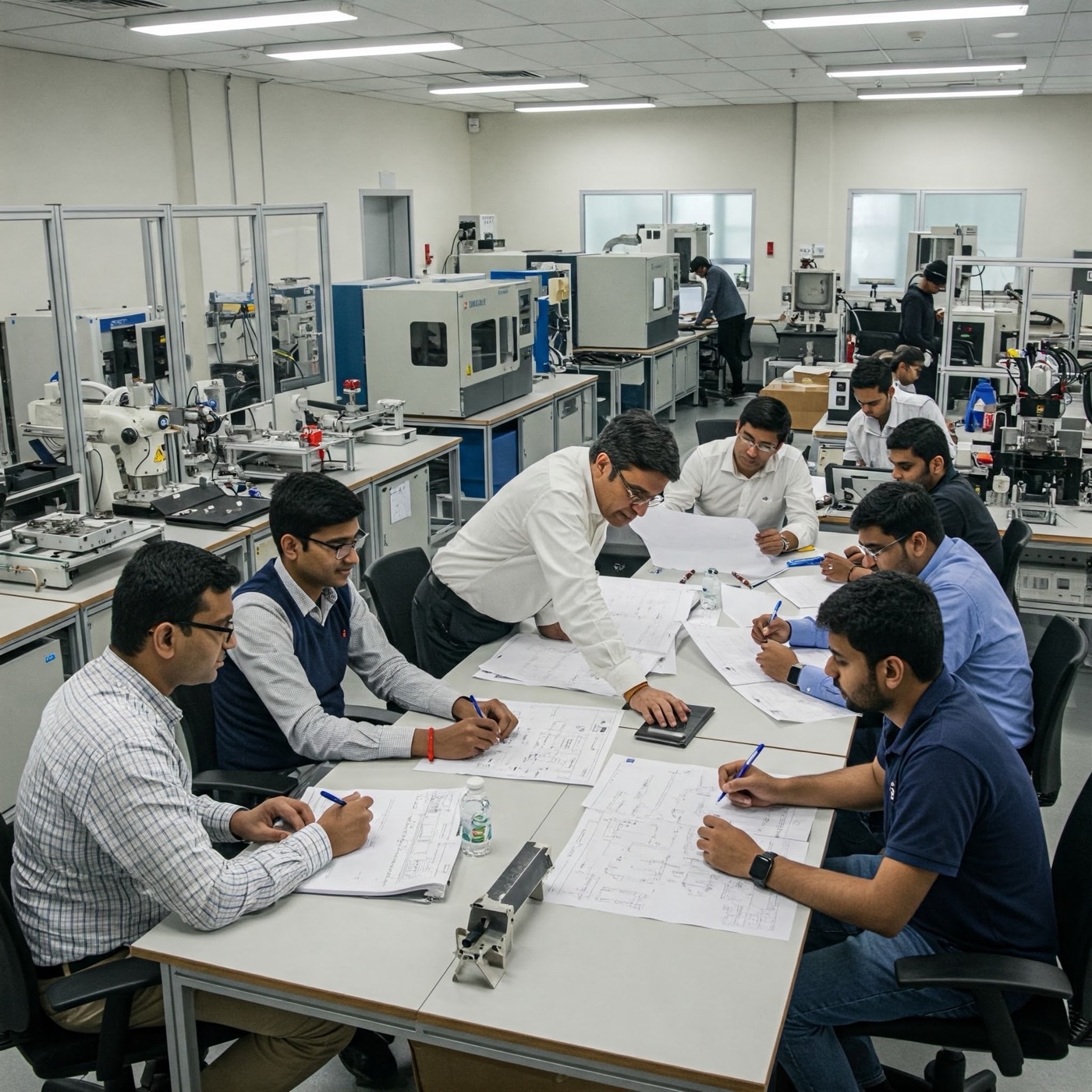
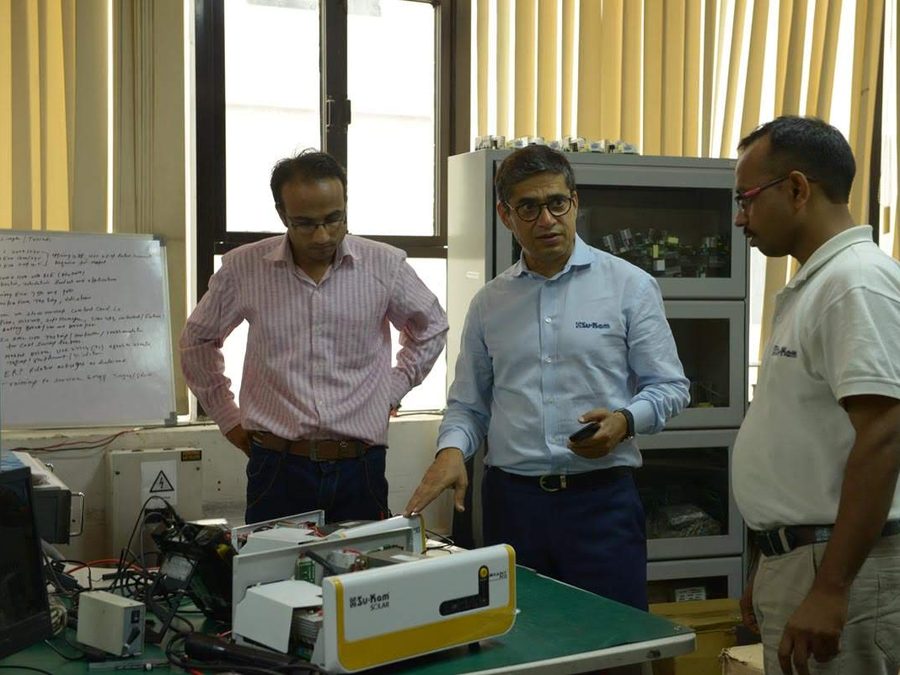
Kunwer Sachdev with the engineering team at the Su-Kam R&D lab
At the Su-Kam R&D lab with the engineering team.Su-Kam R&D lab में engineering team के साथ।
“My college dream had been to build my own pen brand, and I had already named it in my head: Su-Kam.” “मेरा कॉलेज का सपना अपना खुद का पेन ब्रांड बनाने का था, जिसका नाम मैंने मन में तय कर लिया था: Su-Kam।”

In 1986, with differences unresolved, I left and joined Shyam Communications (1986–88) — which later grew into the Shyam Telecom group — where I learnt to sell electronics. In 1988, I struck out on my own with cable TV manufacturing, my first venture. Took a three-year LL.B (1986–89) from Delhi University's Law Centre 1 on Mandir Marg — evening classes, while running the cable TV business, out of pure interest. 1986 में मतभेदों के बाद मैंने वह काम छोड़ा और Shyam Communications (1986–88) में नौकरी की — जो बाद में Shyam Telecom ग्रुप बना — जहाँ मैंने electronics बेचना सीखा। 1988 में cable TV manufacturing से पहला venture शुरू किया। Cable TV business चलाते हुए अपनी रुचि से Delhi University के Law Centre 1, Mandir Marg से तीन साल की evening LL.B (1986–89) की डिग्री ली।

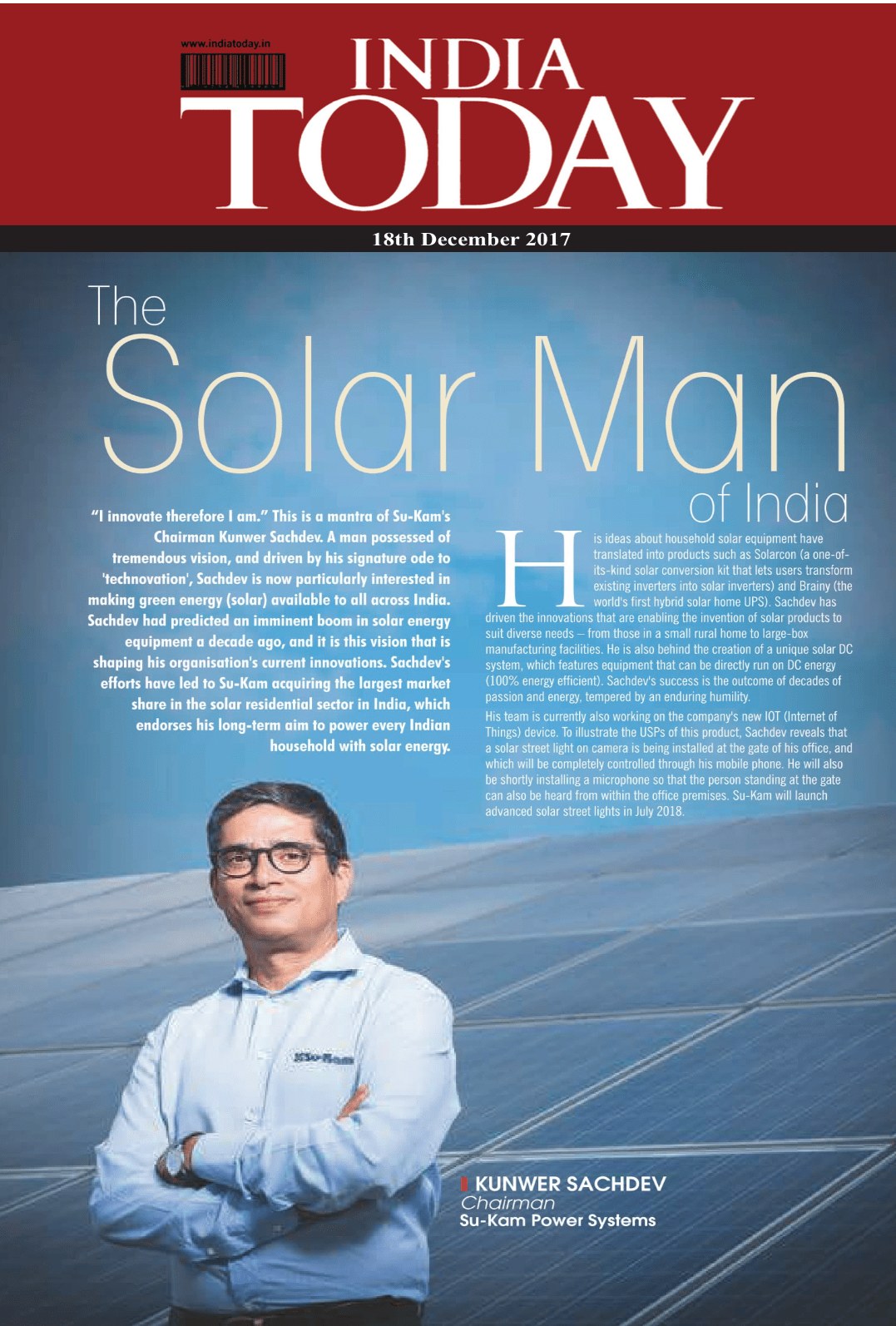
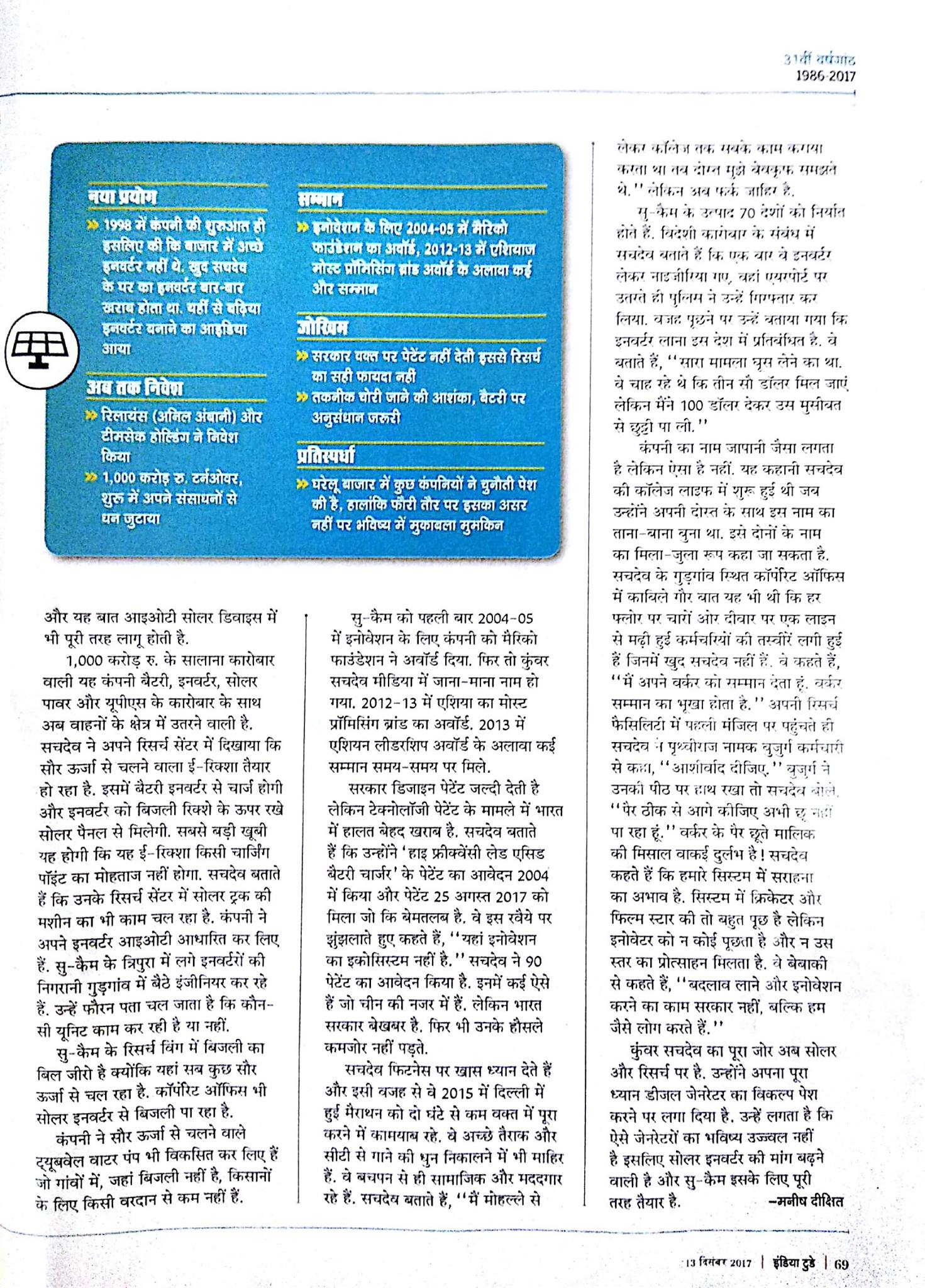
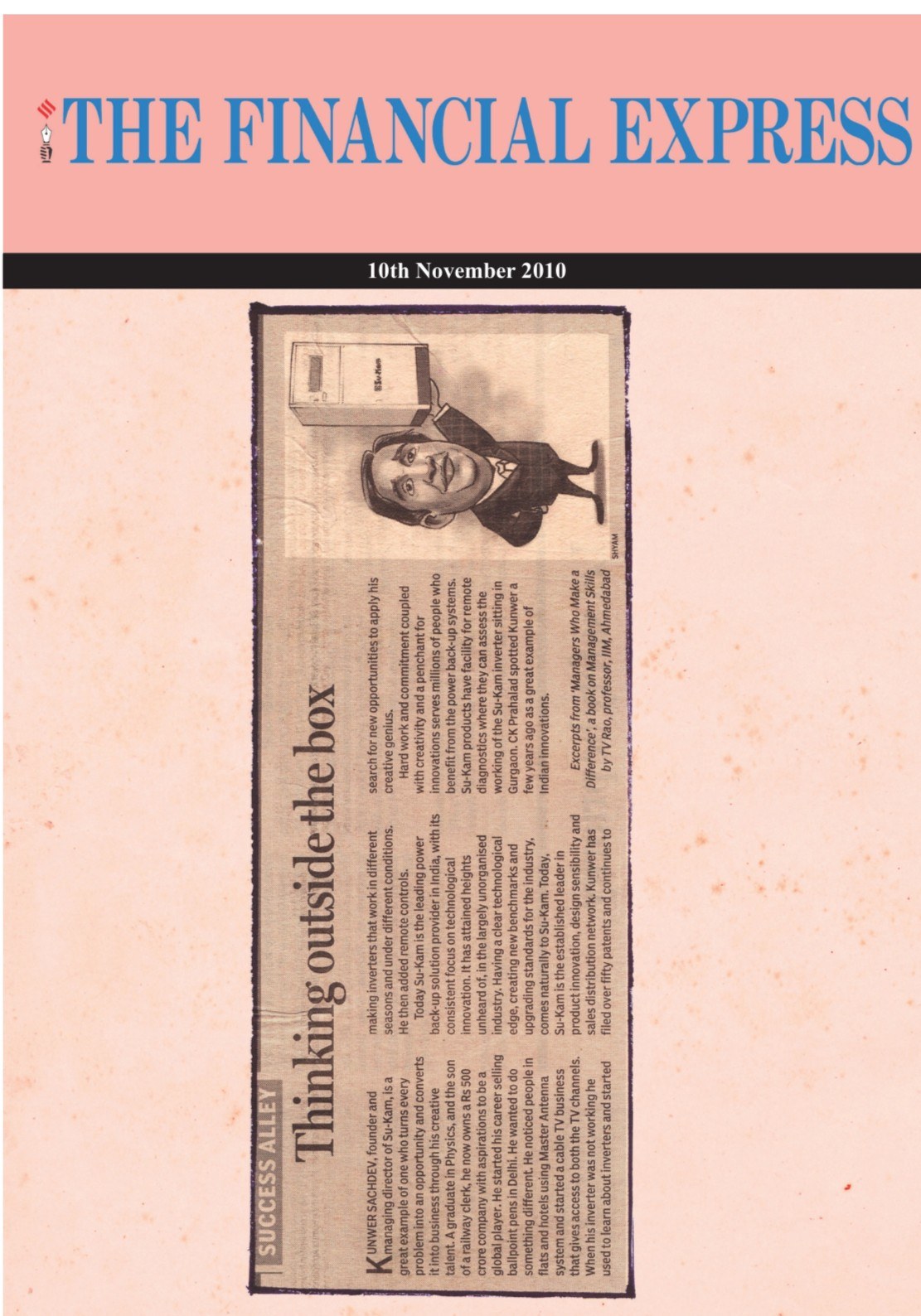
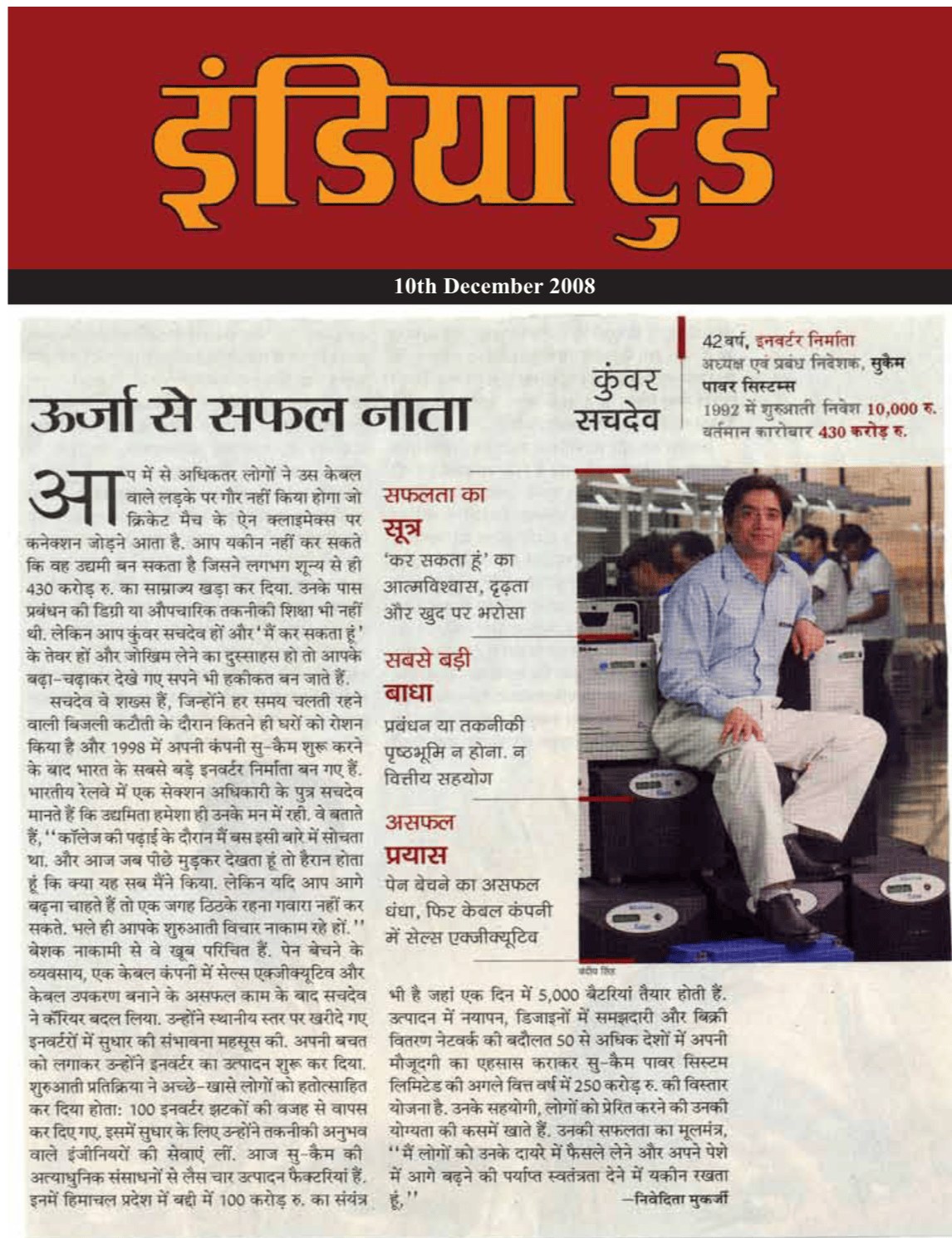
In 1998, that manufacturing muscle pivoted into inverters, and the brand name I had carried since college finally became a company: Su-Kam Power Systems (Inverter & Solar). In 2020, Su-Vastika (Lithium & BESS). In 2026, Kunwwer.ai (AI for hardware, software, and daily use). Along the way: India's first commercial DSP sine-wave inverter, first plastic-body inverter (India Today Innovation of the Decade), first Solar Hybrid UPS, and first Solar Online UPS. 1998 में वही manufacturing inverters में बदली और कॉलेज के दिनों का नाम कंपनी बना: Su-Kam Power Systems (Inverter & Solar)। 2020 में Su-Vastika (Lithium & BESS)। 2026 में Kunwwer.ai (hardware, software और daily use के लिए AI)। इस सफर में: India का पहला commercial DSP sine-wave inverter, पहला plastic-body inverter (India Today Innovation of the Decade), पहला Solar Hybrid UPS, और पहला Solar Online UPS।

Su-Kam was a pen brand first. Su-Kam पहले एक पेन ब्रांड था।

Long before there was Su-Kam Power Systems, before there were patents or exports or magazine covers, I was a schoolboy on a cycle. My elder brother Kamal Sachdeva ran a pens business, and I helped him work it — travelling by cycle and by bus across Delhi and into neighbouring states like Haryana and UP, calling on stationery shops with a bag of stock. Selling pens on the road as a schoolboy is not a glamorous origin, and it is not a story most founders like to tell. But it is where sales stopped being a theory and became a physical skill: reading a shopkeeper in three seconds, opening a conversation without permission, closing without pressure, and moving on when the answer was no. Every negotiation that came later in my life started on those roads. Su-Kam Power Systems से बहुत पहले, patents, exports या magazine covers से पहले, मैं साइकिल पर चलने वाला एक स्कूली लड़का था। मेरे बड़े भाई कमल सचदेवा का पेन का business था, और मैं उनके साथ काम करता था — साइकिल और बस से Delhi और पड़ोसी राज्यों Haryana व UP में जाकर दुकानों पर पेन पहुँचाना। सड़क पर पेन बेचना कोई glamorous शुरुआत नहीं है और यह ऐसी कहानी नहीं है जो ज़्यादातर founders बताना पसंद करते हैं। लेकिन यहीं sales theory से निकलकर एक असली हुनर बनी: किसी दुकानदार को तीन सेकंड में पढ़ना, बिना झिझक बातचीत शुरू करना, बिना दबाव डाले deal close करना, और "ना" मिलने पर आगे बढ़ जाना। ज़िंदगी की हर बाद की negotiation उन्हीं सड़कों पर सीखी थी।

From 1981 to 1984 I studied Mathematical Statistics at Hindu College, Delhi University — one of Delhi's oldest colleges — and kept selling pens through college on the side. Somewhere in those years I made a decision I did not talk about much: I was going to build my own pen brand. I had already given it a name in my head. I called it Su-Kam. After graduation, my brother had just built a shop on Nai Sarak in Old Delhi — India's oldest wholesale market for paper, books and stationery — and I started sitting at that shop full-time. But my own dream and his shop were not the same dream, and by 1986 the differences were unresolved. I left, and took a job at Shyam Communications, an electronics company that would later grow into the Shyam Telecom group. From 1986 to 1988, that job taught me the discipline the pens business never could: how to sell electronics — a category, a specification, a warranty, a service network. 1981 से 1984 तक मैंने Hindu College, Delhi University से Mathematical Statistics पढ़ी और साथ में पेन भी बेचता रहा। उन्हीं सालों में मैंने एक फैसला किया जिसकी चर्चा मैंने ज़्यादा नहीं की: मैं अपना खुद का पेन ब्रांड बनाऊँगा। मैंने मन में उसका नाम Su-Kam रख लिया था। Graduation के बाद, भाई ने पुरानी Delhi की Nai Sarak पर नई दुकान बनाई — किताबों और stationery का देश का सबसे पुराना wholesale बाज़ार — और मैं वहाँ बैठने लगा। लेकिन मेरा सपना और उनकी दुकान एक नहीं थे, और 1986 तक मतभेद अनसुलझे रहे। मैंने वह काम छोड़ा और Shyam Communications में नौकरी की (जो बाद में Shyam Telecom ग्रुप बना)। 1986 से 1988 के बीच उस नौकरी ने मुझे वो अनुशासन सिखाया जो पेन का काम नहीं सिखा सका था: electronics कैसे बेचे जाते हैं — एक category, specifications, warranty, और service network।

In 1988, I struck out on my own for the first time. Cable television was arriving in Indian homes, and the equipment behind those local networks — amplifiers, converters, distribution gear — was almost entirely imported and impossibly expensive for the small operators wiring up neighbourhoods. That became my first venture. I had no engineering degree and no formal training — I taught myself the physics by reading class 9 and 10 Physics textbooks on the side, one chapter at a time, and then walked into the workshop and built it. Ten years later, the same manufacturing muscle pivoted into inverters. The brand name I had been carrying since college — Su-Kam — finally became a company. Su-Kam Power Systems was born in 1998. The pens never happened. The name did. The through-line from pens to cable to inverters to solar to lithium to AI is not "diversification." It is one continuous idea, held since a college classroom: find the thing Indians are paying too much for or waiting too long for, build it here, and stay close to the customer. The industries have changed. The instinct has not. And in the middle of all this, out of pure interest, I took a three-year LL.B (1986–89) from Delhi University's Law Centre 1 on Mandir Marg — evening classes, while running the cable TV business. 1988 में, मैंने पहली बार अपने दम पर शुरुआत की। Indian घरों में cable TV आ रहा था, और उन networks का सामान — amplifiers, converters, distribution gear — लगभग पूरी तरह imported और छोटे operators के लिए बेहद महंगा था। यह मेरा पहला venture बना। मेरे पास कोई engineering degree नहीं थी — मैंने class 9 और 10 की Physics की किताबें पढ़कर खुद तकनीक सीखी, एक-एक chapter करके, और workshop में जाकर उपकरण बनाए। दस साल बाद वही manufacturing inverters की तरफ मुड़ गई। कॉलेज के दिनों से मन में रखा नाम — Su-Kam — आखिरकार एक कंपनी बना: Su-Kam Power Systems (1998)। पेन कभी नहीं बने, नाम बन गया। पेन से cable, inverters, solar, lithium और अब AI तक की यह यात्रा "diversification" नहीं है। यह एक निरंतर विचार है: वह चीज़ खोजिए जिसके लिए भारतीय बहुत ज़्यादा पैसा दे रहे हैं या बहुत इंतज़ार कर रहे हैं, उसे यहीं बनाइए, और ग्राहक के करीब रहिए। Industries बदली हैं, instinct नहीं बदला। और इसी बीच अपनी रुचि से मैंने Law Centre 1, Mandir Marg, Delhi University से तीन साल की evening LL.B (1986–89) भी पूरी की।
The Su-Kam StorySu-Kam की कहानी

Building India's largest power backup brand.India का सबसे बड़ा power backup brand बनाना।

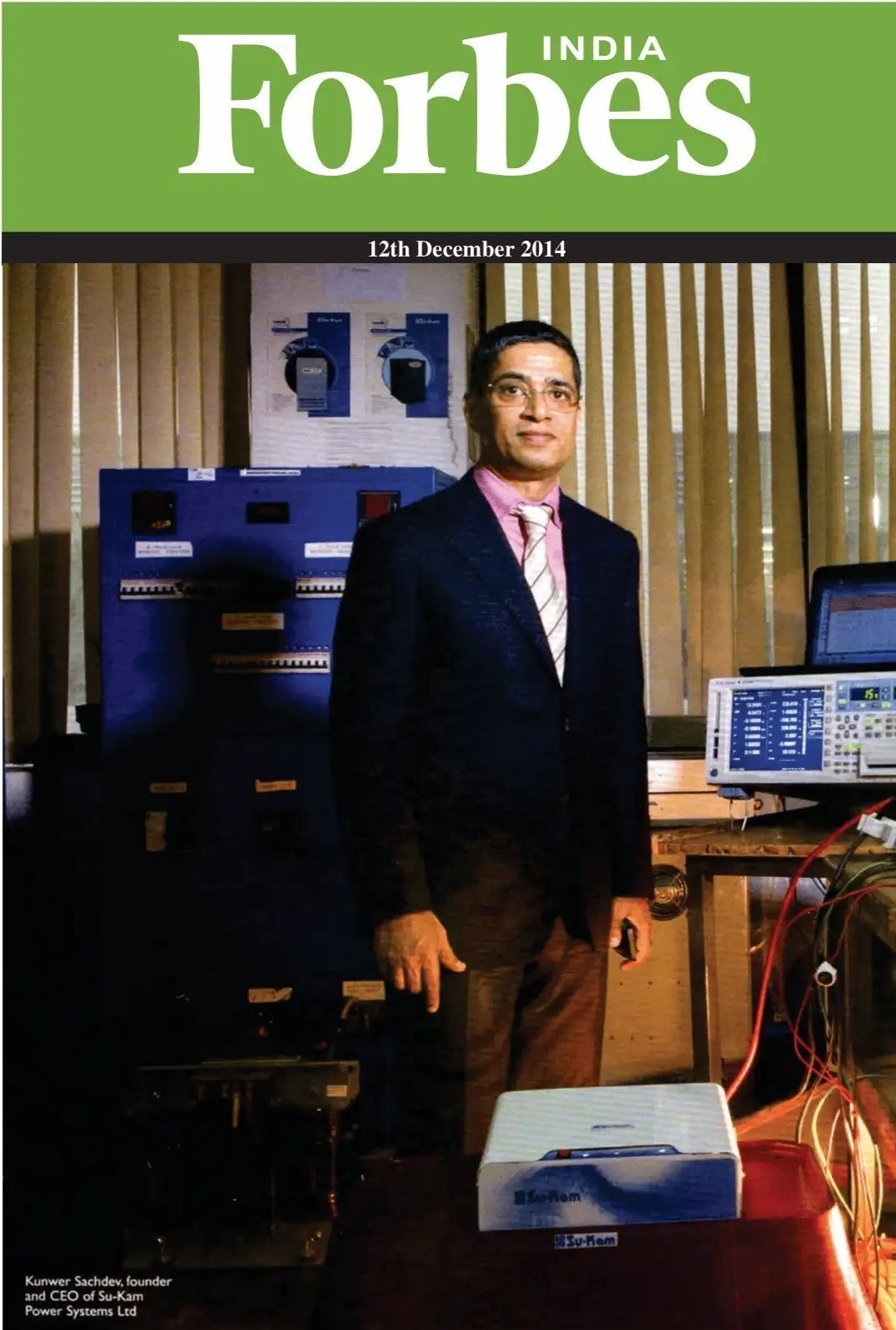
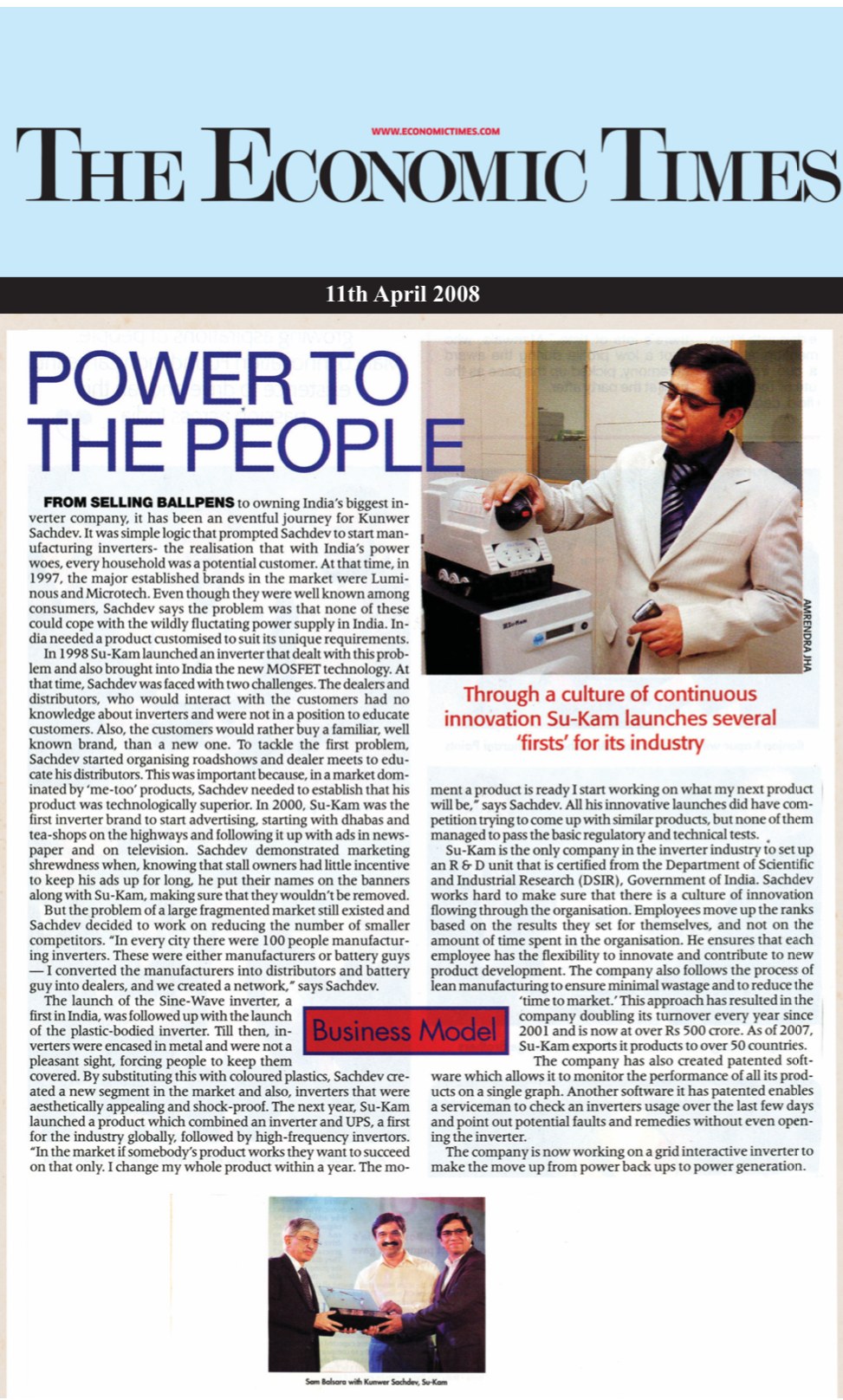
Established the Su-Kam brand in 1988 alongside a cable-TV manufacturing business. Launched the power systems division in 1998 with ₹10,000 in initial capital and a soldering iron. Over three decades, built India's largest power backup company — creating the Home UPS category, filing the country's first DSP sine-wave inverter, first plastic-body inverter, first Solar Hybrid UPS, and first Solar Online UPS. At its peak: 5,000 employees and exports to 90+ countries.1988 में cable TV equipment के साथ Su-Kam ब्रांड की स्थापना हुई। 1998 में मात्र ₹10,000 की पूंजी और एक soldering iron के साथ power systems division शुरू किया। तीन दशकों में India की सबसे बड़ी power backup कंपनी बनाई — Home UPS category बनाई, देश का पहला DSP sine-wave inverter, पहला plastic-body inverter, पहला Solar Hybrid UPS, और पहला Solar Online UPS पेश किया। Peak पर: 5,000 employees और 90+ देशों में export।

Featured in booksBusiness साहित्य में दर्ज

Documented in India's business literature.India के प्रमुख business साहित्य में दर्ज यात्रा।

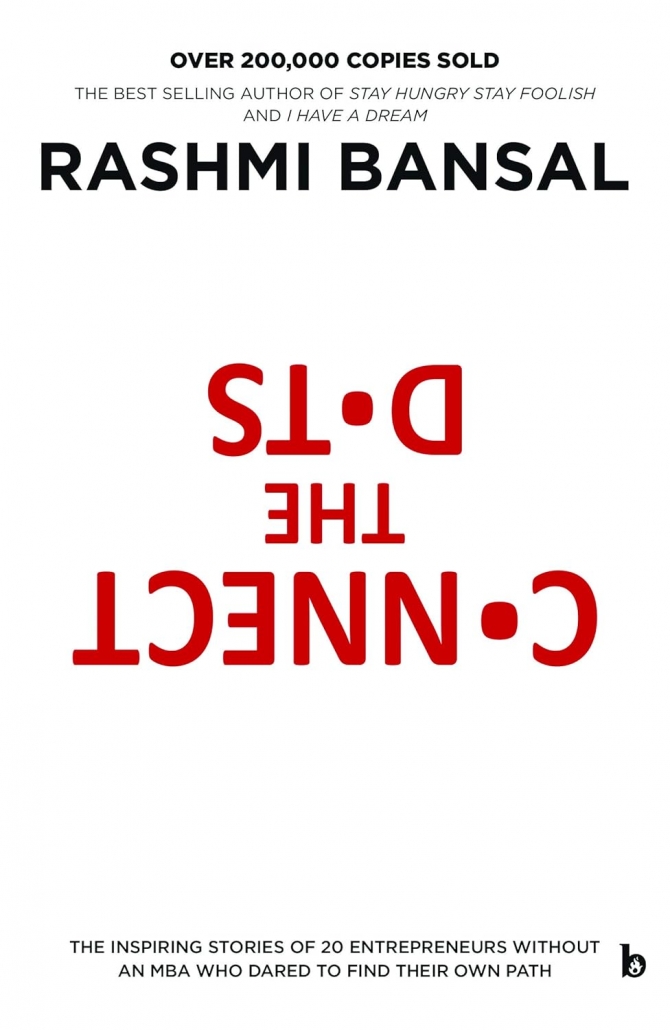
Connect the Dots by Rashmi Bansal — book cover
Connect the Dots

By Rashmi Bansal — best-selling author of Stay Hungry Stay Foolish and I Have a Dream (200,000+ copies sold).Rashmi Bansal द्वारा लिखित — Stay Hungry Stay Foolish और I Have a Dream की बेस्टसेलिंग लेखिका (200,000+ प्रतियां बिकीं)।

View on Amazon India →
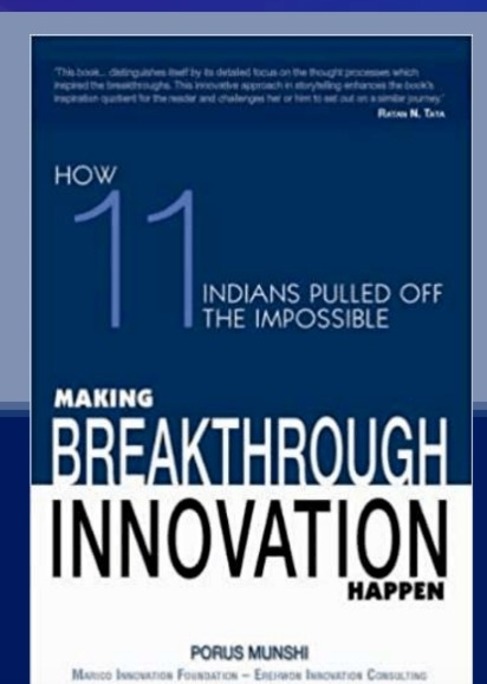
Making Breakthrough Innovation Happen by Porus Munshi — book cover
Making Breakthrough Innovation Happen

By Porus Munshi — HarperCollins, 2010. Features Su-Kam among eleven Indian breakthroughs — “how 11 Indians pulled off the impossible.”Porus Munshi द्वारा लिखित — HarperCollins, 2010। Su-Kam को ग्यारह Indian breakthroughs में शामिल किया गया — “कैसे 11 भारतीयों ने असंभव को संभव बनाया।”

View on Amazon India →
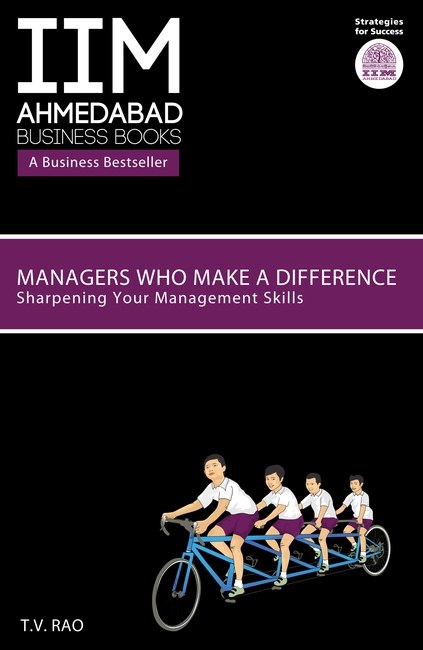
Managers Who Make A Difference by T V Rao — IIMA Business Books cover
Managers Who Make A Difference

By Prof. T V Rao — IIMA Business Books, Random House India, 2010. IIMA business text — Prof. T V Rao profiles Kunwer as a manager who turns problems into opportunities, following late Prof. C.K. Prahalad's 2007 seminar identification.Prof. T V Rao द्वारा लिखित — IIMA Business Books, Random House India, 2010। IIMA केस स्टडी — Prof. T V Rao ने कुंवर को समस्याओं को अवसरों में बदलने वाले प्रबंधक के रूप में रेखांकित किया।

Read on Google Books →
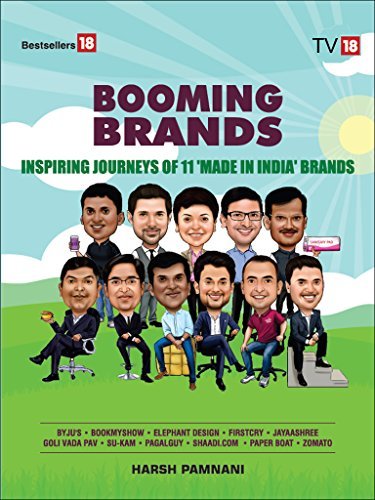
Booming Brands by Harsh Pamnani — book cover
Booming Brands

By Harsh Pamnani, 2018 — Inspiring Journeys of 11 'Made in India' Brands. Su-Kam profiled as one of 11 exemplar Made-in-India brands; used as reference text in Indian business schools.Harsh Pamnani द्वारा लिखित, 2018 — 11 'Made in India' Brands की प्रेरक यात्राएं। Su-Kam को शीर्ष भारतीय ब्रांड्स में शामिल किया गया; B-schools में reference टेक्स्ट।

View on Amazon India →
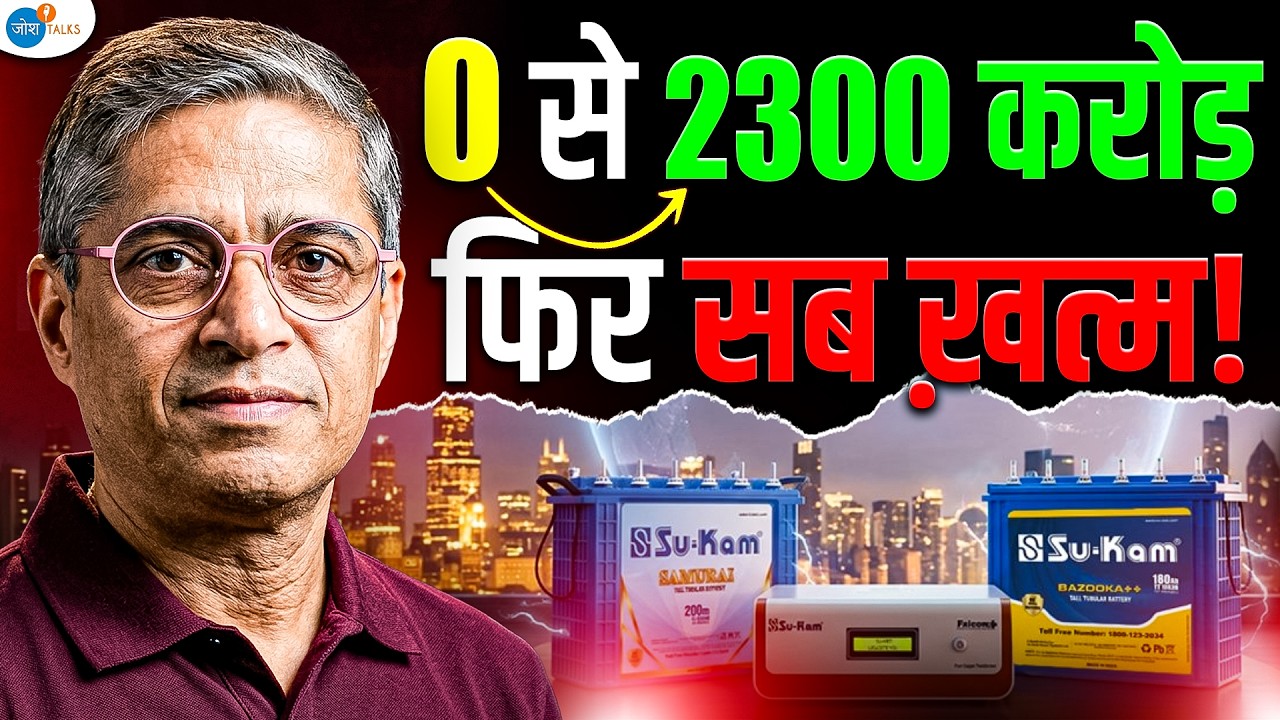
On video

Hear the story in Hindi.कहानी हिंदी में सुनें।

Josh Talks · 1.1M+ views · in Hindi

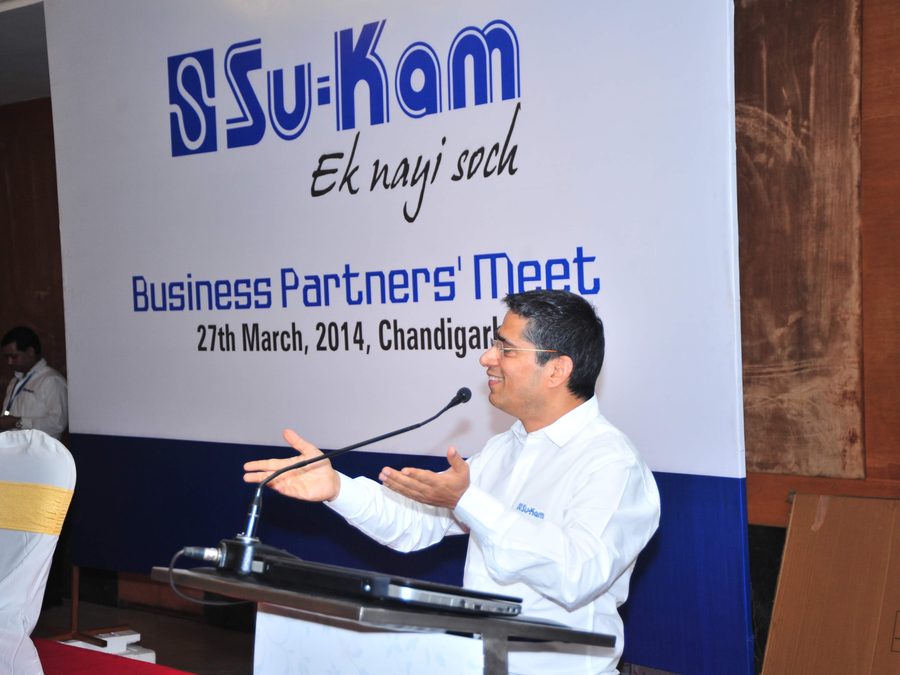
Kunwer Sachdev speaking at Su-Kam Business Partners' Meet, Chandigarh, 2014
Kunwer speaking at the Su-Kam Business Partners’ Meet, Chandigarh, 27 March 2014.
Kunwer with engineering team at Su-Kam R&D lab
At the Su-Kam R&D lab with the engineering team.
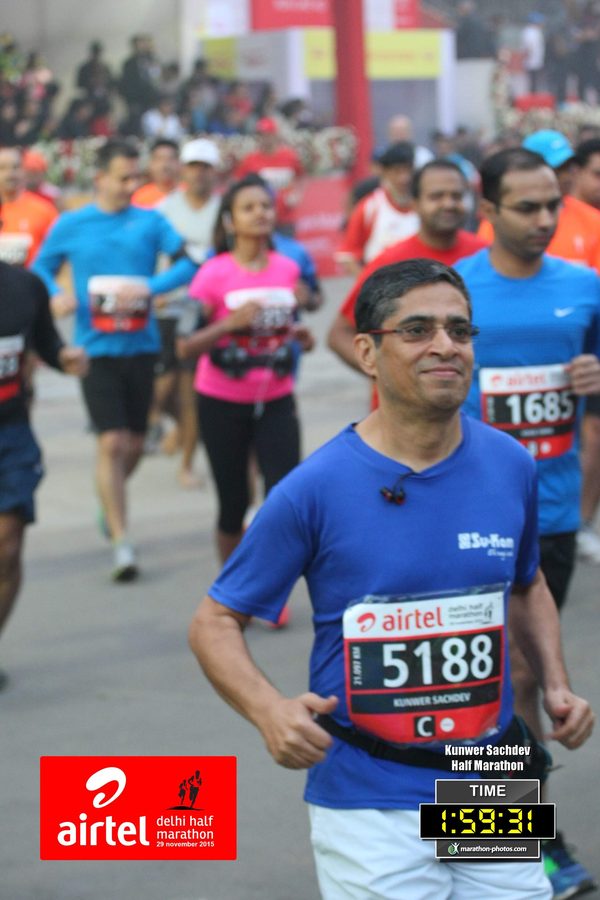
Kunwer Sachdev at Airtel Delhi Half Marathon, November 2015
Airtel Delhi Half Marathon, 29 November 2015 — finish time 1:59:31.

Exited Su-Kam in 2019 following IBC insolvency proceedings.2019 में IBC insolvency proceedings के बाद Su-Kam से exit किया।

R&D and IP

R&D and IP — how 106 patents happened. R&D और IP — 106 Patents कैसे बने।

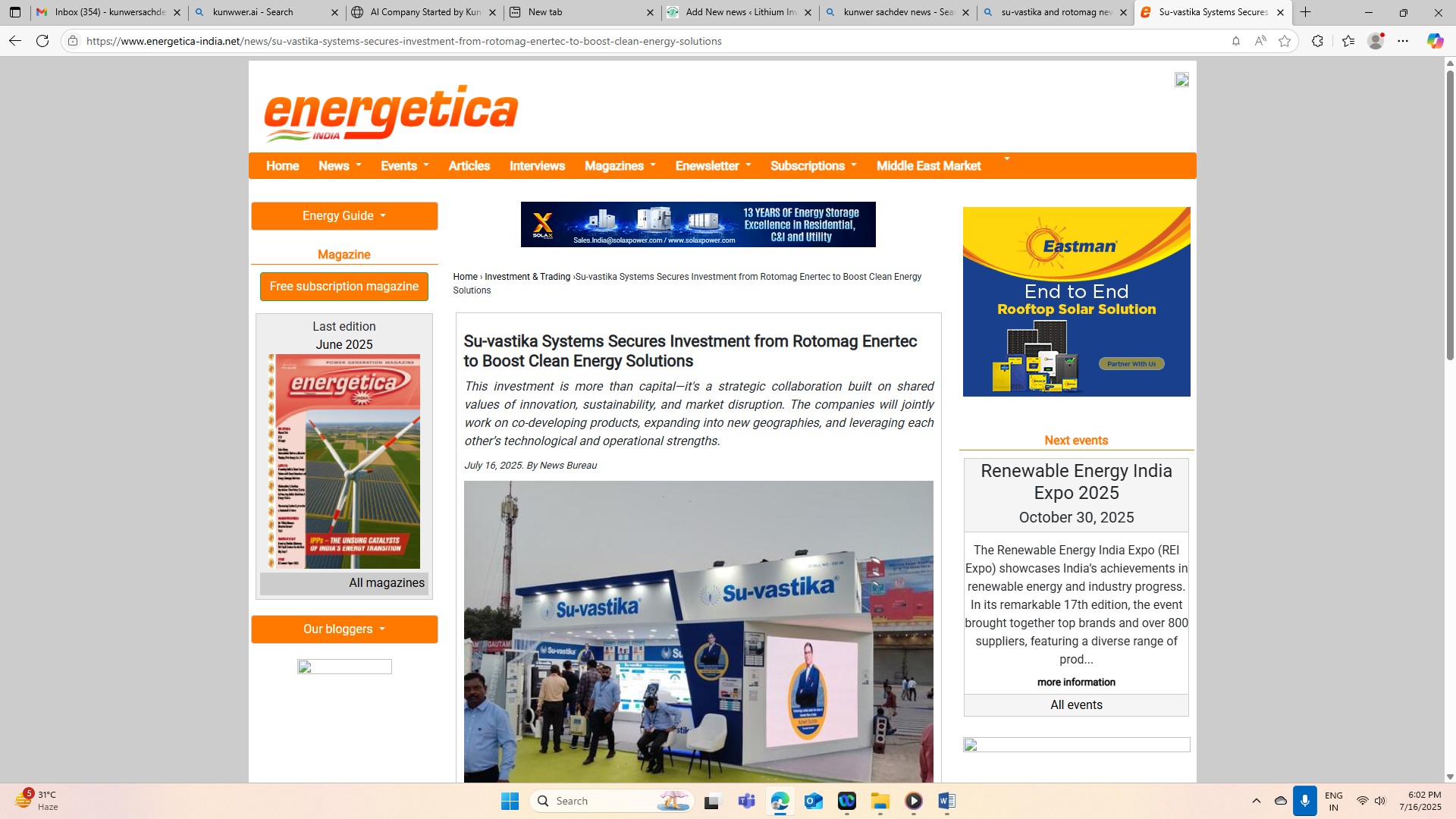
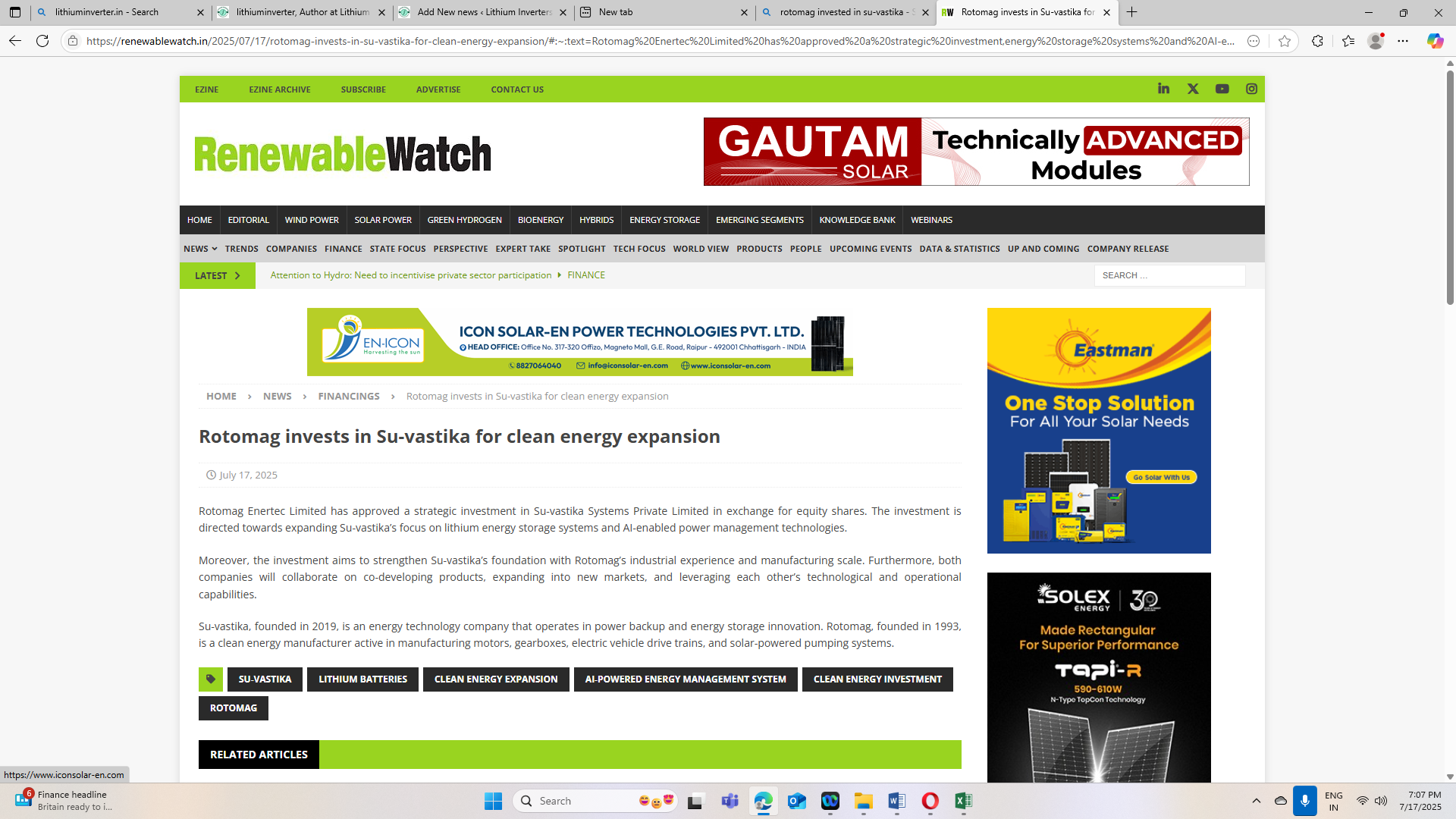
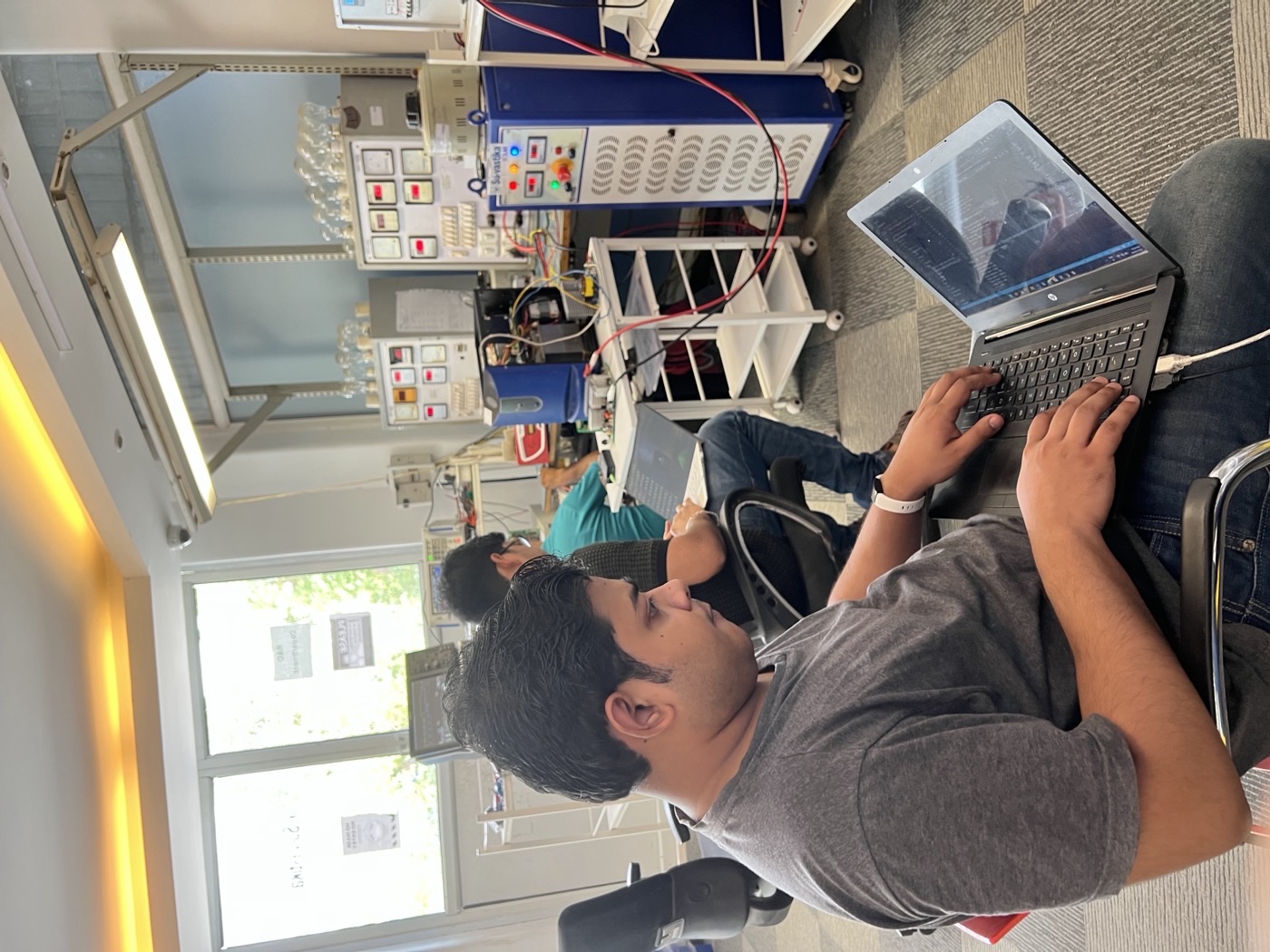
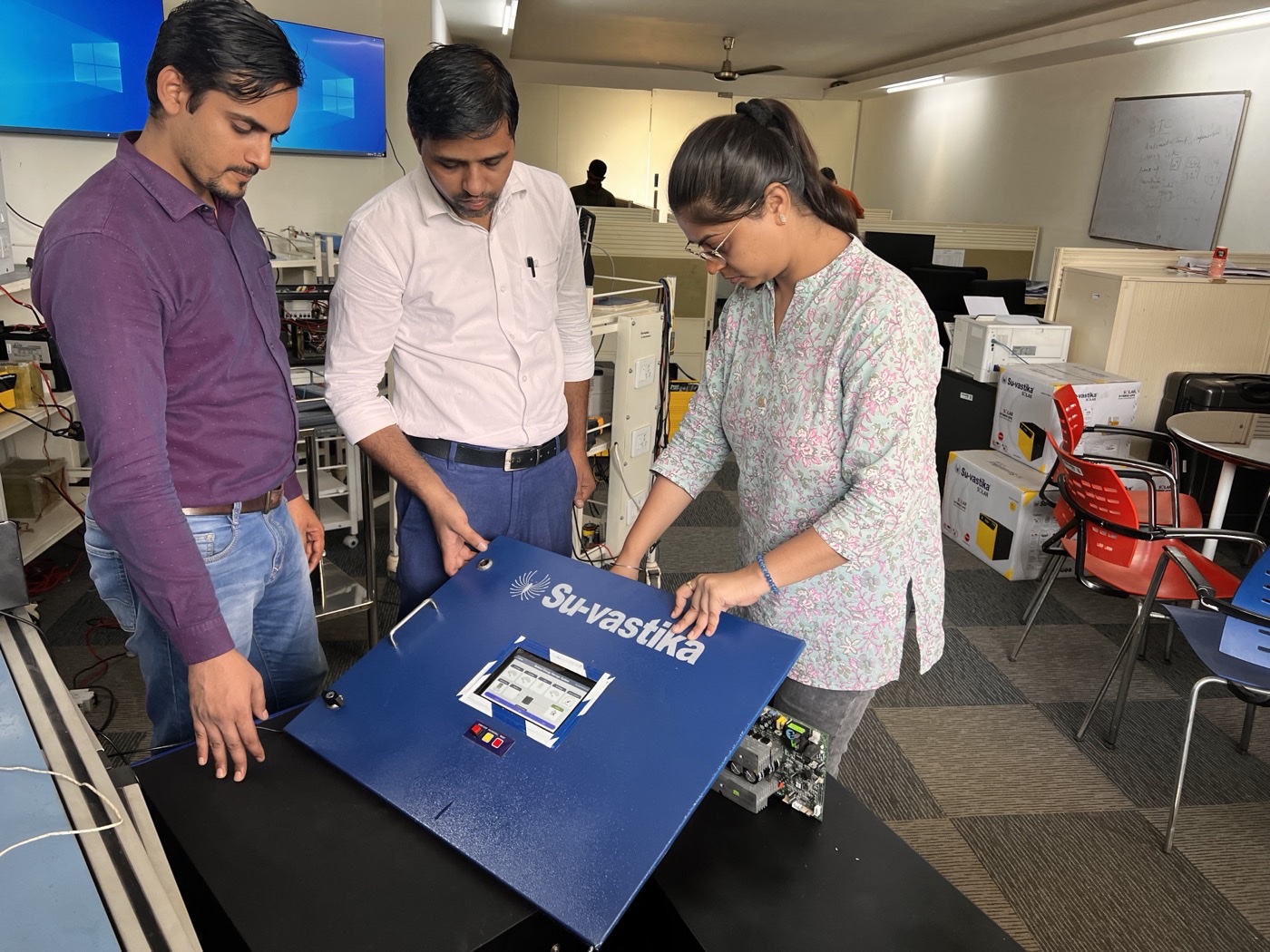
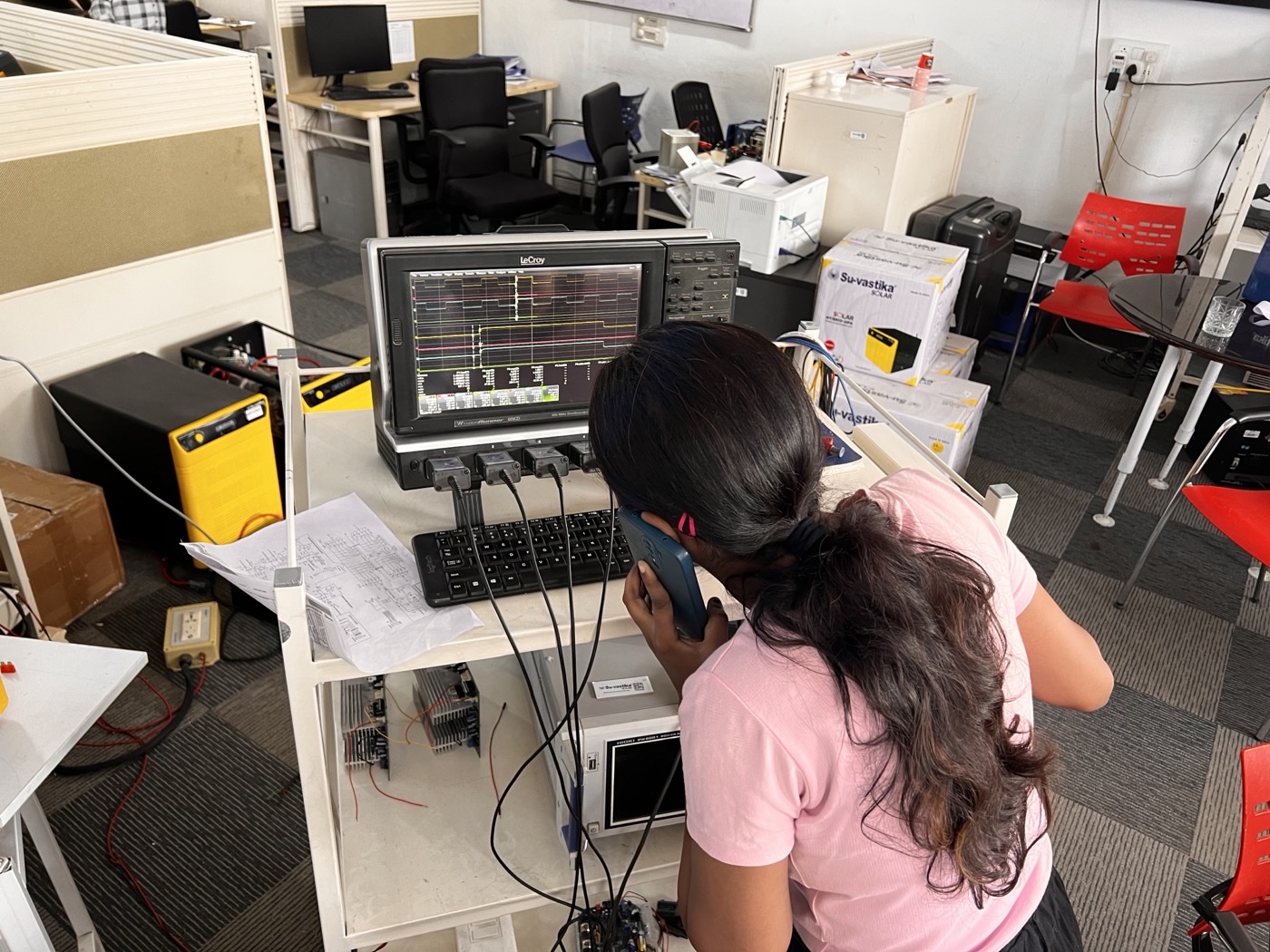
Patents don't come from marketing decks. They come from a bench, an oscilloscope, an argument between engineers, and a founder who knows the IP process well enough to file before the competition copies. The 106 WIPO patents — 77 at Su-Kam, 25 at Su-Vastika, 4 in AI — were built the same way, inside R&D floors like the one you see here at Su-Vastika. Patents किसी marketing deck से नहीं निकलते। वे bench, oscilloscope, engineers के बीच बहस, और उस founder से निकलते हैं जो IP process को इतना समझता हो कि competitors के नकल करने से पहले file कर सके। 106 WIPO patents — Su-Kam में 77, Su-Vastika में 25, और AI में 4 — इसी तरह बने, R&D floors पर जैसा आप यहाँ Su-Vastika में देख रहे हैं।

R&D lab — engineers at the workbench
R&D lab — engineers at the workbench R&D Lab — workbench पर engineers
Component-level R&D work — open chassis and PCBs
Component-level R&D work — open chassis and PCBs Component-level R&D — open chassis और PCBs
Test setup with LeCroy oscilloscope and measurement gear
Test setup with LeCroy oscilloscope and measurement gear LeCroy oscilloscope और measurement gear के साथ test setup
Team collaboration in the R&D lab over engineering drawings
Team collaboration in the lab. लैब में टीम सहयोग।
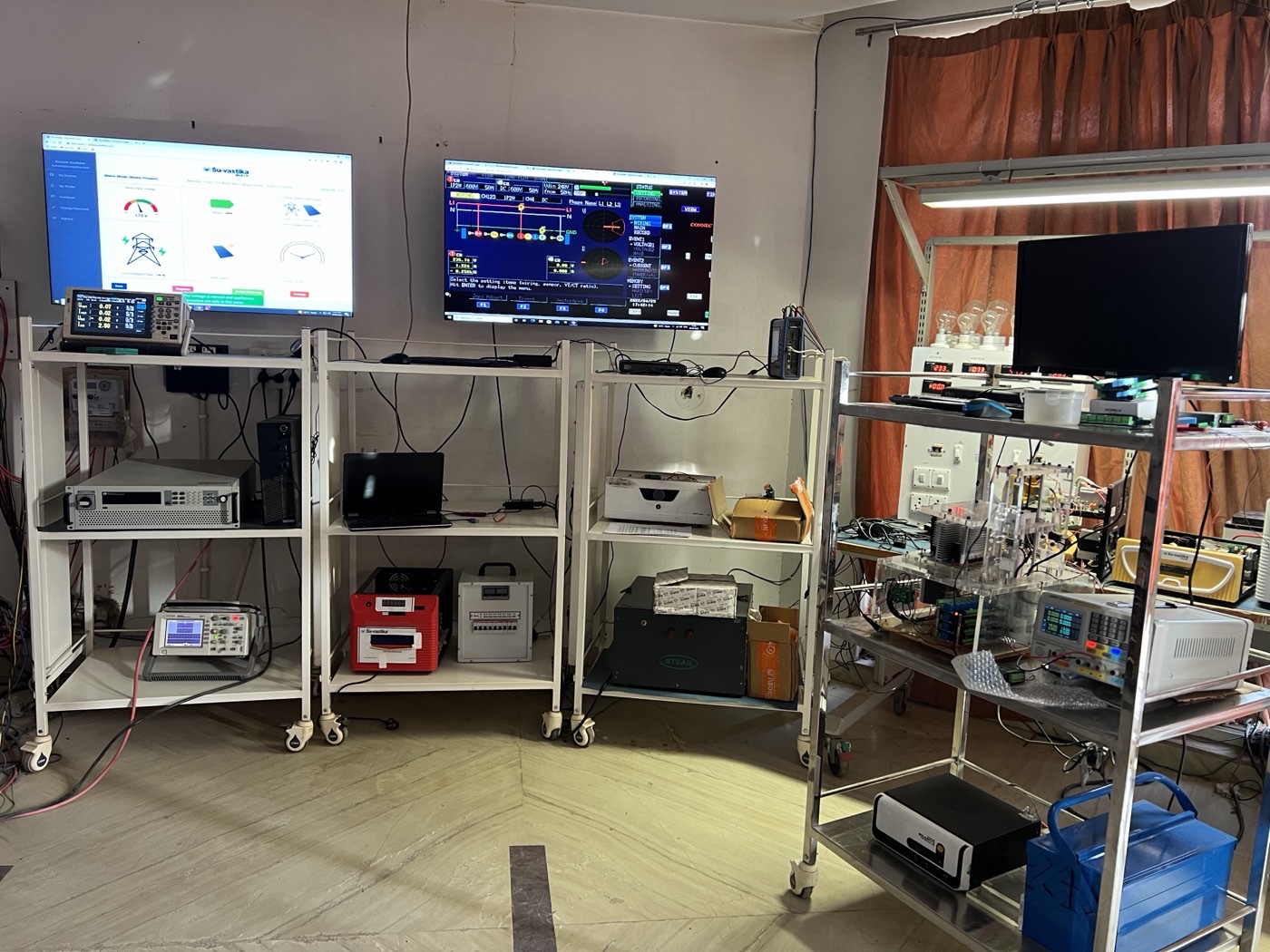
R&D lab infrastructure and equipment
The lab infrastructure — where prototypes become products. लैब की इन्फ्रास्ट्रक्चर — जहाँ प्रोटोटाइप प्रोडक्ट बनते हैं।
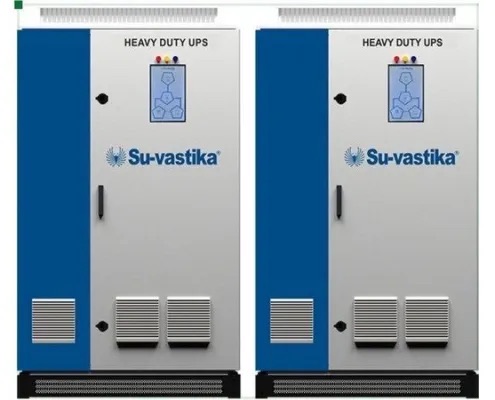
Su-Vastika Heavy Duty UPS cabinets
Su-Vastika Heavy Duty UPS cabinets Su-Vastika Heavy Duty UPS cabinets — continuous industrial load के लिए
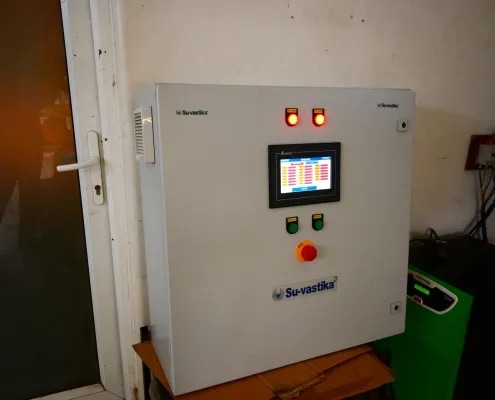
Su-Vastika BESS control panel installed in the field
Su-Vastika BESS control panel installed in the field Su-Vastika BESS control panel — field में installed
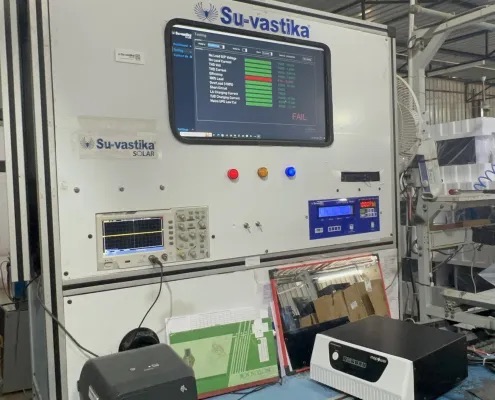
Su-Vastika R&D testing bench
R&D testing bench — every unit validated before shipment. R&D टेस्टिंग बेंच — हर यूनिट शिपमेंट से पहले जाँची जाती है।
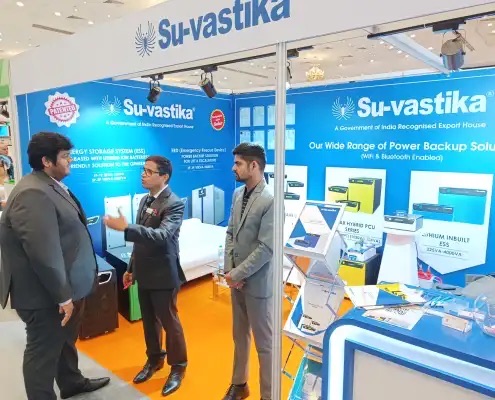
Su-Vastika at an industry exhibition
Su-Vastika at industry exhibitions — Government of India recognised Export House. Su-Vastika औद्योगिक प्रदर्शनियों में — भारत सरकार द्वारा मान्यता प्राप्त Export House।
What I've watchedमैंने जो देखा

Three wavesतीन Waves

I built Su-Kam in an era when a full-page ad in The Economic Times moved the market. By the time I filed my 50th patent, that same market had moved to Facebook. So I sat down and learned it — WordPress, digital marketing, social media, the whole stack. Digital did not disrupt me. I disrupted myself into it.मैंने Su-Kam उस दौर में बनाई जब The Economic Times का full-page ad बाज़ार चलाता था। जब तक मैंने अपना 50वां patent file किया, वही बाज़ार Facebook पर जा चुका था। इसलिए मैंने खुद बैठकर सब सीखा — WordPress, digital marketing, social media, पूरा stack। Digital ने मुझे disrupt नहीं किया, मैंने खुद को उसमें ढाल लिया।

Now the same thing is happening again — one layer deeper. The websites I taught myself to build in WordPress are being drafted by AI. The dealer WhatsApp messages I hand-crafted are being written by ChatGPT. Anyone who thinks this is a phase is going to lose.अब वही चीज़ दोबारा हो रही है — एक layer और अंदर। जिन websites को बनाना मैंने WordPress में सीखा था, उन्हें AI draft कर रहा है। जिन dealer WhatsApp messages को मैं खुद लिखता था, उन्हें ChatGPT लिख रहा है। जो सोचता है कि यह सिर्फ एक हवा है, वह पिछड़ जाएगा।

But here is what most tech commentary misses: AI is not just eating digital media. It is coming for the physical world I know best. Factories. HR. R&D. Purchase. Sales. The MSME owner in Ludhiana who thinks AI is a Silicon Valley thing does not realize his HR team's job will change more in the next three years than it has in the last thirty. That is what I write about — not because I predict it, but because I watch it happen every day inside the specialized sites I now run.लेकिन जो बात ज़्यादातर tech commentary miss करती है: AI सिर्फ digital media को नहीं खा रहा। वह उस physical world पर भी आ रहा है जिसे मैं सबसे बेहतर जानता हूँ। Factories. HR. R&D. Purchase. Sales. Ludhiana का MSME owner जो सोचता है AI सिर्फ Silicon Valley की बात है, उसे नहीं पता कि उसके HR team का काम अगले तीन साल में पिछले तीस साल से ज़्यादा बदलेगा। यही मैं लिखता हूँ — भविष्यवाणी नहीं, बल्कि उन specialized sites में रोज़ देखते हुए जो मैं चलाता हूँ।

Read the full essay →पूरा निबंध पढ़ें →

The networkविशेष समुदायों के लिए Network

The network विशेष समुदायों के लिए Network

Kunwwer.ai sits inside a growing network of specialised sites I am building — each one with a specific Indian community in mind. Different communities have different needs. Generic AI trained on generic Western data cannot serve any of them well. That is the gap the network is being built to close. Kunwwer.ai मेरे द्वारा बनाई जा रही specialized sites के बढ़ते network का हिस्सा है — हर site किसी खास Indian community को ध्यान में रखकर बनी है। अलग-अलग समुदायों की अलग ज़रूरतें हैं। सामान्य Western data पर train किया गया AI इनमें से किसी की भी अच्छी सेवा नहीं कर सकता। यह network उसी gap को भरने के लिए बनाया जा रहा है।

See how I use AI across 10 live sites →देखें मैं 10 live sites पर AI कैसे इस्तेमाल करता हूँ → Read the full thesis →पूरी thesis पढ़ें →
Stay closeStay close

New writing, weekly.नया लेखन, हर हफ्ते।