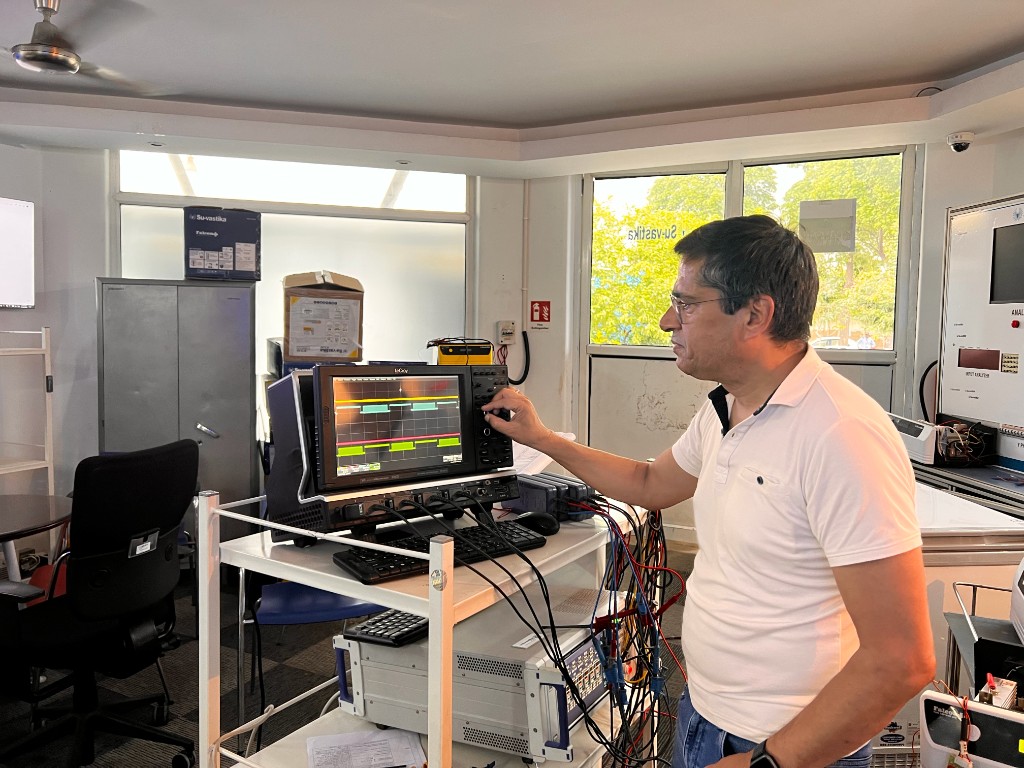
World-class instruments on the cart — not a dark shed with a 20 MHz scopeCart पर world-class instruments — अंधेरे shed में 20 MHz scope नहीं
The Square-Wave Dark AgeSquare-Wave का वो अंधकार युग
In 1998, when power cuts hit an Indian home, the living room turned into an industrial nightmare. The inverters sold by local battery assemblers produced crude, choppy square-wave electrical output. Ceiling fans produced a deafening hum, television pictures flickered with horizontal noise bars, and sensitive electronic appliances burned out within months.1998 में जब Indian घरों में बिजली जाती थी, तो living room किसी कारखाने जैसा शोर मचाने लगता था। Local battery assemblers जो inverters बेचते थे, वे घटिया और कटा-फटा square-wave करंट बनाते थे। छत के पंखे भयानक आवाज़ करते थे, TV की स्क्रीन पर धारियां तैरने लगती थीं, और नाज़ुक electronic उपकरण कुछ ही महीनों में फुंक जाते थे।
Pure sine-wave power — the clean, silent alternating current that the grid is supposed to supply — was considered an imported luxury. European and American brands sold online UPS systems for banks and server rooms at ₹40,000 to ₹80,000, completely out of reach for a normal Indian family. The conventional wisdom in the Indian electrical trade was clear: "Indians will never pay for sine-wave; it is too complex, too expensive, and impossible to manufacture locally on an MSME budget."Pure sine-wave करंट — यानी वो साफ और शांत बिजली जो grid से मिलती है — उस वक्त एक बहुत महंगी विदेशी विलासिता मानी जाती थी। European और American brands बैंकों और server rooms के लिए ₹40,000 से ₹80,000 में online UPS बेचते थे, जो एक आम भारतीय परिवार की पहुंच से कोसों दूर था। बाज़ार की आम सोच यही थी: "भारतीय कभी sine-wave का पैसा नहीं देंगे; यह बहुत पेचीदा है, बहुत महंगा है, और किसी छोटे MSME के बस की बात नहीं है।"
I refused to accept that premise. I knew that if we could build a silent, pure sine-wave inverter at an affordable Indian price point, we would not just sell a product — we would revolutionize the everyday life of millions of households. But to do that, I needed engineers who had the audacity to build what had never been built in India before.मैंने इस सोच को मानने से साफ इनकार कर दिया। मुझे पता था कि अगर हम किफायती दाम में एक शांत, pure sine-wave inverter बना दें, तो हम सिर्फ एक product नहीं बेचेंगे — हम करोड़ों परिवारों की रोज़मर्रा की ज़िंदगी बदल देंगे। लेकिन इसके लिए मुझे ऐसे engineers चाहिए थे जिनके अंदर वो बनाने का जिगर हो जो India में पहले कभी किसी ने नहीं बनाया था।
Enter Sanjeev Saini and Chauhanसंजीव सैनी और चौहान का आगमन
That was when Sanjeev Saini and Chauhan came into my life. They were young, exceptionally gifted, and possessed an intense, hungry technical passion. But like most Indian engineers of that era, they were operating in an ecosystem that offered them zero institutional support. Large Indian companies wanted them to copy existing foreign circuits; academic institutions had no connection to commercial manufacturing.यहीं मेरी ज़िंदगी में संजीव सैनी और चौहान आए। वे युवा थे, असाधारण रूप से प्रतिभाशाली थे, और उनके अंदर तकनीक को लेकर एक गहरी भूख और दीवानगी थी। लेकिन उस दौर के ज़्यादातर Indian engineers की तरह, वे भी एक ऐसे माहौल में काम कर रहे थे जहाँ कोई संस्थागत सहयोग नहीं था। बड़ी भारतीय कंपनियाँ सिर्फ विदेशी circuits की नकल करवाना चाहती थीं, और कॉलेजों का ज़मीनी manufacturing से कोई वास्ता नहीं था।
I sat down with Sanjeev and Chauhan in our modest workshop. I told them: "Forget square-wave. Forget what the market is doing. We are going to design India's first microprocessor and DSP-based pure sine-wave inverter from scratch. Whatever equipment you need, I will buy. Whatever financial losses we suffer on the bench, I will absorb. You just focus on the physics."मैंने अपनी छोटी सी workshop में संजीव और चौहान के साथ बैठकर बात की। मैंने उनसे कहा: "Square-wave को भूल जाइए। बाज़ार क्या कर रहा है, उसे भूल जाइए। हम बिल्कुल शून्य से India का पहला microprocessor और DSP-based pure sine-wave inverter बनाएंगे। आपको जो भी औज़ार चाहिए, मैं लाकर दूंगा। Bench पर जो भी नुकसान होगा, मैं अपनी जेब से भरूंगा। आप बस विज्ञान और engineering पर ध्यान दीजिए।"
The Months of Smoke: Where Most Founders Quitधुएं और धमाकों के वो महीने: जहाँ ज़्यादातर मालिक हिम्मत हार जाते हैं
Designing a pure sine-wave inverter using high-frequency Pulse Width Modulation (PWM) and digital signal processors in the early 2000s in India was brutal. The microcontroller code had to switch power MOSFETs at 20,000 times a second without shoot-through cross-conduction. If the timing was off by even half a microsecond, the entire bridge exploded with a loud bang, scattering plastic and silicon across the bench.2000 के दशक की शुरुआत में High-frequency Pulse Width Modulation (PWM) और digital signal processors (DSP) के साथ pure sine-wave inverter डिज़ाइन करना एक आग का दरिया था। Microcontroller code को power MOSFETs को एक सेकंड में 20,000 बार switch कराना होता था, वो भी बिना cross-conduction के। अगर timing में आधे microsecond की भी चूक हो जाती, तो पूरी power bridge ज़ोरदार धमाके के साथ उड़ जाती थी और चारों तरफ सिलिकॉन और प्लास्टिक के टुकड़े बिखर जाते थे।
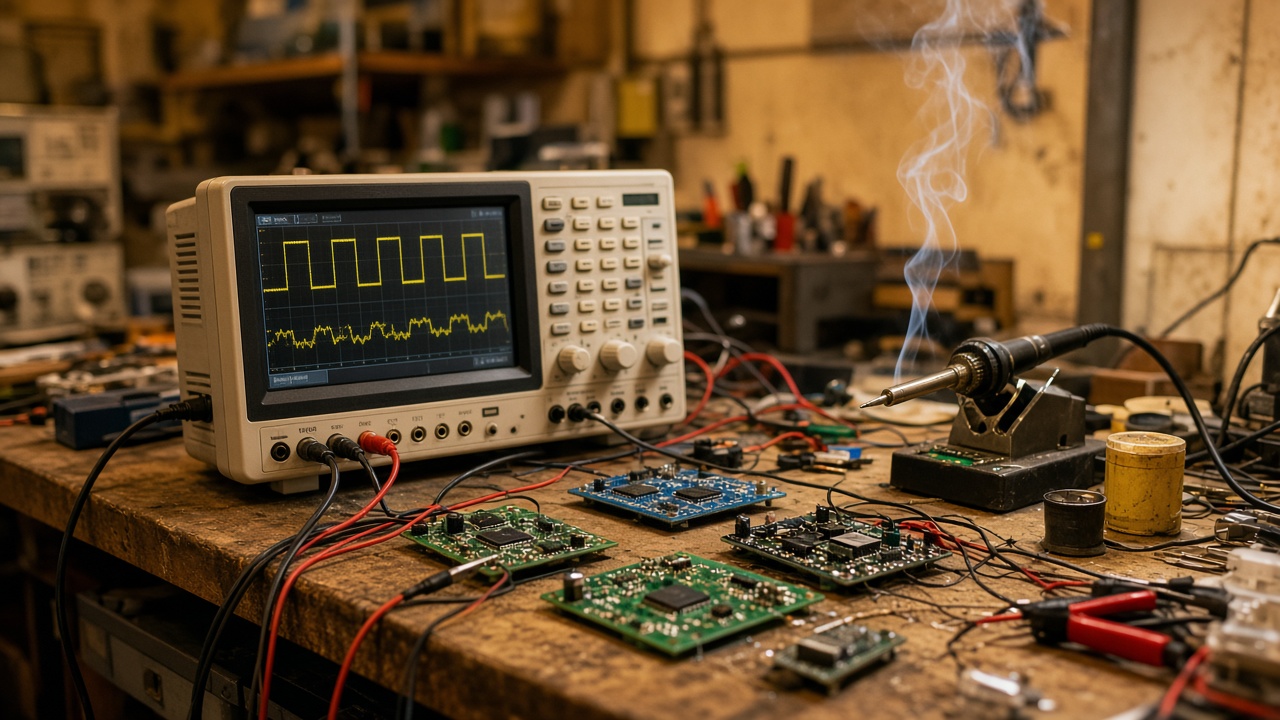
The workbench — burnt epoxy, vaporized copper, and the patience to solder againवो workbench — जली epoxy, पिघला copper, और दोबारा solder करने का सब्र
There were weeks when our workbench smelled of nothing but burnt epoxy, vaporized copper traces, and roasted semiconductor silicon. Thousands of expensive imported MOSFETs were blown to pieces. Days turned into nights, and the prototypes kept tripping, burning, or distorting under inductive loads.कई हफ्ते ऐसे बीते जब हमारी workbench से सिर्फ जली हुई epoxy, पिघले हुए copper traces और भुने हुए semiconductors की बदबू आती थी। हज़ारों महंगे imported MOSFETs उड़कर राख हो गए। दिन रात में बदलते रहे, और जब भी inductive load डाला जाता, prototypes या तो ट्रिप हो जाते, जल जाते, या wave shape बिगाड़ देते थे।
This is the exact fork in the road where 99% of Indian businesses fail. In a typical company, when tens of thousands of rupees of components blow up day after day, the promoter panics. He yells at the engineers, questions their competence, cuts R&D budgets, and orders them to go back to making cheap copies. That fear destroys the engineer's spirit.यही वो मोड़ है जहाँ 99% Indian businesses दम तोड़ देते हैं। किसी आम कंपनी में जब रोज़ाना हज़ारों रुपये के components धमाकों के साथ उड़ते हैं, तो मालिक घबरा जाता है। वह engineers पर चिल्लाता है, उनकी काबिलियत पर शक करता है, R&D का बजट काट देता है, और उन्हें दोबारा घटिया नकल बनाने के काम पर लगा देता है। वही डर engineer की आत्मा को मार देता है।
I knew that if I showed even a flicker of doubt, Sanjeev and Chauhan would retreat. So every time a board exploded, I walked into the lab with tea and samosas. I sat on the stool between them, looked at the oscilloscope screen, and said: "Shabash! Excellent. We just found another way the circuit cannot be switched. We are closer to the truth today than we were yesterday. Let's clean the bench, solder a fresh board, and fire it up again."मुझे पता था कि अगर मैंने अपने चेहरे पर शिकन या शक की एक लकीर भी आने दी, तो संजीव और चौहान पीछे हट जाएंगे। इसलिए जब भी कोई board फटता था, मैं चाय और समोसे लेकर lab में पहुँच जाता था। मैं उनके बीच स्टूल पर बैठता, oscilloscope की स्क्रीन देखता, और कहता: "शाबाश! बहुत बढ़िया। हमने एक और तरीका ढूंढ लिया जिससे सर्किट नहीं चलना चाहिए। हम कल से ज़्यादा आज सच के करीब हैं। चलो बेंच साफ करो, नया board solder करो, और दोबारा चालू करो।"
Backing the Team: The Best Equipment Money Could Buyटीम का साथ: दुनिया के बेहतरीन Instruments में निवेश
A founder cannot demand world-class innovation while handing his engineers second-rate tools. Other Indian inverter manufacturers of that era were tinkering in dark sheds with crude analog multimeters and cheap 20 MHz scopes. I refused to let my team guess in the dark.एक founder अपनी टीम को घटिया औज़ार देकर उनसे world-class innovation की उम्मीद नहीं कर सकता। उस दौर के बाकी भारतीय inverter निर्माता अंधेरे कमरों में साधारण analog multimeters और 20 MHz के पुराने scopes के सहारे तुक्के लगा रहे थे। मैंने अपनी टीम को अंधेरे में तीर चलाने के लिए नहीं छोड़ा।
I told Sanjeev and Chauhan: "You bring the engineering grit; I will bring whatever tools you need to see the truth." I invested heavily in top-tier laboratory instrumentation: high-bandwidth 500 MHz Digital Storage Oscilloscopes capable of freezing high-frequency nanosecond switching spikes, precision Power Analyzers to measure true RMS waveforms and Total Harmonic Distortion (THD) down to the decimal, and high-current programmable DC Power Supply Simulators to test battery impedance and voltage sag without blowing up real battery banks.मैंने संजीव और चौहान से कहा: "आप engineering का दम लगाइए; सच को साफ़ देखने के लिए जो भी औज़ार चाहिए, वो मैं ला कर दूंगा।" मैंने बेहतरीन laboratory instrumentation में भारी निवेश किया: हाई-बैंडविड्थ 500 MHz Digital Storage Oscilloscopes जो नैनोसेकंड के high-frequency switching spikes को स्क्रीन पर फ्रीज़ कर सकते थे, सटीक Power Analyzers जो true RMS और Total Harmonic Distortion (THD) को दशमलव तक नाप सकते थे, और programmable DC Power Supply Simulators जो असली batteries को नुकसान पहुंचाए बिना voltage sag और load impedance को simulate कर सकते थे।
When an engineer has a 500 MHz scope and a precision power analyzer in front of him, engineering ceases to be an argument of opinions. It becomes an exact science. You don't argue about whether the gate driver is ringing; you look at the screen and see the nanosecond parasitic oscillation. Giving ordinary Indian engineers extraordinary instruments was the foundation of our breakthrough.जब एक engineer के सामने 500 MHz का scope और precision power analyzer होता है, तो engineering किसी की राय या बहस का विषय नहीं रह जाती। यह एक सटीक विज्ञान बन जाती है। आपको इस पर बहस करने की ज़रूरत नहीं होती कि gate driver में ringing क्यों है; आप स्क्रीन पर देखते हैं और नैनोसेकंड के parasitic oscillation को पकड़ लेते हैं। साधारण भारतीय engineers के हाथों में असाधारण औज़ार थमाना ही हमारी सफलता की असली नींव थी।
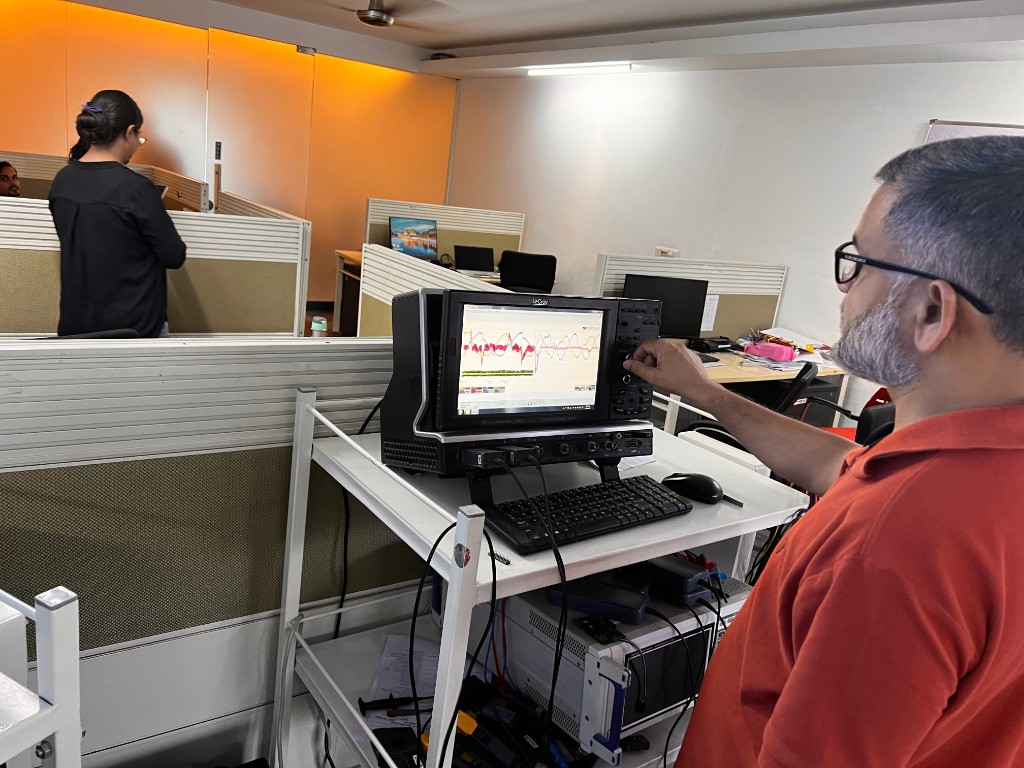
Nanosecond spikes on the screen — opinions end where the waveform beginsScreen पर nanosecond spikes — जहाँ waveform शुरू होती है, वहाँ राय खत्म
The Breakthrough on the ScreenScreen पर वो ऐतिहासिक Breakthrough
Because Sanjeev Saini and Chauhan had the runway to learn and the finest diagnostic equipment to guide them, they mastered high-frequency Digital Signal Processing (DSP). They wrote firmware that dynamically sensed and corrected output distortion thousands of times every second.क्योंकि संजीव सैनी और चौहान के पास सीखने का पूरा वक्त था और उनका मार्गदर्शन करने के लिए दुनिया के बेहतरीन diagnostic equipment थे, उन्होंने high-frequency Digital Signal Processing (DSP) पर महारत हासिल कर ली। उन्होंने ऐसा firmware लिखा जो हर सेकंड हज़ारों बार output distortion को भांपकर उसे real-time में ठीक करता था।
Late one night in our Gurgaon lab, the decisive moment arrived. We connected our prototype to the 500 MHz digital oscilloscope, linked the output to the precision power analyzer, and threw a heavy 1,000-watt continuous inductive load onto the unit.Gurgaon की lab में देर रात वो निर्णायक पल आ गया। हमने अपने prototype को 500 MHz digital oscilloscope से जोड़ा, output पर precision power analyzer लगाया, और मशीन पर 1,000-watt का भारी inductive load चालू कर दिया।
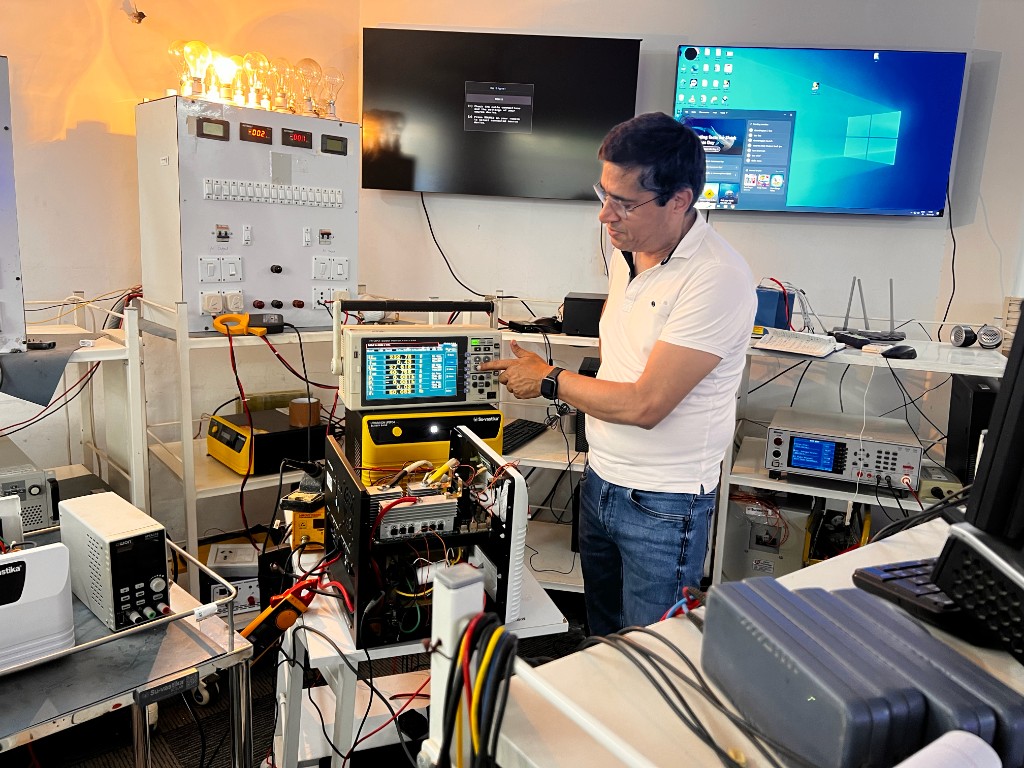
Power analyzer + open prototype under load — THD under 2%, quieter than the gridPower analyzer + open prototype under load — THD 2% से कम, grid से भी साफ़
On the 500 MHz scope, there was a textbook-pure, silky-smooth sine wave without a trace of crossover distortion. The power analyzer screen flashed a Total Harmonic Distortion (THD) of under 2% — cleaner than the grid power supplied by the state electricity boards. In the workshop, the ceiling fans spun in eerie, whisper-quiet silence.500 MHz scope की स्क्रीन पर बिना किसी distortion के एक मक्खन जैसी साफ़, बिल्कुल textbook pure sine wave तैर रही थी। Power analyzer की स्क्रीन ने 2% से भी कम का Total Harmonic Distortion (THD) दिखाया — जो सरकारी बिजली बोर्डों की सप्लाई से भी ज़्यादा साफ़ था। और workshop में छत के पंखे बिना किसी आवाज़ के, बिल्कुल खामोशी से चल रहे थे।
Had I Not Supported Them, India Would Have Waited a Decadeअगर मैंने उनका साथ न दिया होता, तो India को एक दशक इंतज़ार करना पड़ता
I say this with zero arrogance and 100% conviction: Had I not supported Sanjeev Saini and Chauhan, there would have been no indigenous sine-wave inverter technology in India for years to come.मैं यह बात बिना किसी अहंकार और 100% यकीन के साथ कहता हूँ: अगर मैंने संजीव सैनी और चौहान का हाथ न थामा होता, तो India में सालों साल तक अपनी कोई sine-wave inverter technology पैदा नहीं होती।
Foreign multinationals were interested only in selling expensive finished boxes to wealthy institutions; they had zero interest in developing low-cost decentralized power for Indian homes. Other Indian manufacturers were content making crude square-wave boxes because they were cheap and easy to assemble.विदेशी multinationals सिर्फ अमीर संस्थानों को महंगे डिब्बे बेचने में रुचि रखते थे; आम भारतीय घरों के लिए सस्ती तकनीक बनाने में उनकी कोई दिलचस्पी नहीं थी। और बाकी भारतीय manufacturers घटिया square-wave डिब्बे बनाकर खुश थे, क्योंकि वे सस्ते थे और आसानी से जुड़ जाते थे।
Our breakthrough created the entire "Home UPS" industry. It compelled the entire market — from Luminous and Microtek to every unorganized assembler in Delhi and Meerut — to eventually transition to sine-wave technology. It created tens of thousands of engineering and technician jobs across the country. It protected hundreds of millions of appliances in Indian homes. And it all started because two engineers were given the equipment they needed and the complete freedom to fail.हमारी उस breakthrough ने पूरे "Home UPS" उद्योग को जन्म दिया। उसने पूरे बाज़ार को — Luminous और Microtek से लेकर Delhi और Meerut के हर छोटे assembler तक — आखिरकार sine-wave technology अपनाने पर मजबूर कर दिया। इसने देश भर में हज़ारों engineers और technicians के लिए रोज़गार पैदा किया। इसने करोड़ों भारतीय घरों के उपकरणों को जलने से बचाया। और यह सब सिर्फ इसलिए मुमकिन हुआ क्योंकि दो engineers को वो औज़ार मिले जिनकी उन्हें ज़रूरत थी, और वो माहौल मिला जहाँ गलती करने की पूरी आज़ादी थी।
Engineers Don't Arrive Confident: Patience Is the Entrepreneur's JobEngineers पहले दिन से Confident नहीं होते: वो सब्र ही Entrepreneur का असली काम है
There is a widespread romantic myth in business magazines that great R&D teams are full of swaggering, supremely confident geniuses who know exactly what they are doing from day one. That is pure fiction. In the real world of Indian manufacturing, engineers are generally not confident that they can do it.व्यापार की पत्रिकाओं में यह एक बड़ा काल्पनिक भ्रम फैलाया जाता है कि R&D teams में ऐसे सुपर-जीनियस भरे होते हैं जो पहले दिन से ही पूरे आत्मविश्वास में होते हैं और सब कुछ जानते हैं। यह सिर्फ एक कहानी है। Indian manufacturing की ज़मीनी दुनिया में, R&D के लोग और engineers शुरुआत में बिल्कुल confident नहीं होते कि वे इसे कर पाएंगे।
When I first sat with Sanjeev Saini and Chauhan and told them we were going to build India's first pure sine-wave inverter, they were hesitant. They knew the theory, but they also knew the immense complexity of high-frequency switching, DSP programming, and transformer thermal limits. They were surrounded by an entire industry telling them it was impossible. Their initial instinct, like that of most young Indian engineers, was caution and self-doubt.जब मैं पहली बार संजीव सैनी और चौहान के साथ बैठा और उनसे कहा कि हम India का पहला pure sine-wave inverter बनाएंगे, तो उनके मन में भी झिझक थी। वे थ्योरी जानते थे, लेकिन वे high-frequency switching, DSP programming और transformer के गर्म होने की पेचीदगियों को भी समझते थे। उनके चारों तरफ पूरा बाज़ार यही कह रहा था कि यह मुमकिन नहीं है। ज़्यादातर युवा भारतीय engineers की तरह, उनकी शुरुआती प्रतिक्रिया भी हिचकिचाहट और आत्म-संदेह से भरी थी।
Engineers do not develop confidence in a lecture hall or from a motivational speech. They learn over a period of time. Confidence is a muscle that is built slowly, brick by brick, failure by failure. It takes six months of blown boards, endless oscilloscope trace debugging, and small, incremental victories before an engineer's shoulders relax and they finally say: "Yes, we can crack this."Engineers के अंदर confidence किसी कॉलेज के लेक्चर से या किसी motivational भाषण से नहीं आता। वे समय के साथ, धीरे-धीरे सीखते हैं। आत्मविश्वास एक ऐसी मांसपेशी (muscle) है जो एक-एक ईंट रखकर, एक-एक नाकामी से सीखकर बनती है। जब छह महीने तक लगातार boards जलते हैं, oscilloscope की तरंगों को हज़ारों बार सुधारा जाता है, और छोटी-छोटी सफलताएं मिलती हैं — तब जाकर engineer की रीढ़ सीधी होती है और उसके अंदर से आवाज़ निकलती है: "हाँ, हम इसे कर सकते हैं।"
And that is precisely where 99% of promoters fail. In most Indian companies, the owner has zero patience. If an R&D project doesn't yield a commercial product in 60 days, the promoter panics about the burn rate. He starts pacing the lab, checking his watch, and demanding immediate results. That impatience poisons the room. When engineers feel the boss's anxiety, they stop learning and start taking shortcuts. They abandon deep innovation and slap together a mediocre copy just to get the owner off their back.और ठीक यहीं पर 99% promoters चूक जाते हैं। ज़्यादातर भारतीय कंपनियों में मालिक के पास सब्र (patience) नाम की चीज़ नहीं होती। अगर R&D project 60 दिनों में कोई बिकने लायक product नहीं निकालता, तो मालिक अपने खर्च को देखकर घबराने लगता है। वह lab में चक्कर काटने लगता है, घड़ी देखता है, और तुरंत नतीजों की मांग करने लगता है। वह अधीरता पूरे कमरे में ज़हर घोल देती है। जब engineers मालिक की घबराहट और हड़बड़ी देखते हैं, तो वे सीखना बंद कर देते हैं और जुगाड़ ढूंढने लगते हैं। वे असली innovation छोड़ देते हैं और मालिक का मुंह बंद करने के लिए किसी तरह की कामचलाऊ नकल बनाकर खड़ी कर देते हैं।
That time period — that patient, calm, protective incubation window where people are allowed to learn through failure — is the sole responsibility of the entrepreneur.वो सीखने का समय — वो शांत, धैर्यवान और सुरक्षित माहौल जहाँ लोगों को गलतियों के ज़रिए सीखने की पूरी छूट हो — उसे थाम कर रखना ही एक entrepreneur का सबसे बड़ा और असली काम है।
Your job as a founder is to be the shock absorber for your team. You absorb the financial burn. You absorb the anxiety of the market. You absorb the delays. When the board blows up for the fiftieth time and the engineers look defeated, you smile, offer them tea, and say: "Take your time. Figure out the root cause. I am not in a hurry to build junk; I am willing to wait to build a masterpiece."एक founder के तौर पर आपका काम अपनी टीम के लिए shock absorber बनना है। आप आर्थिक नुकसान का झटका खुद झेलते हैं। आप बाज़ार की चिंता का बोझ अपने कंधों पर लेते हैं। आप देरी का दबाव अपने ऊपर रखते हैं। जब पचासवीं बार board जलता है और engineers के चेहरे लटक जाते हैं, तब आप मुस्कुराते हैं, उन्हें चाय पिलाते हैं, और कहते हैं: "समय लो। खराबी की असली जड़ तक पहुँचो। मुझे घटिया माल बनाने की कोई जल्दी नहीं है; मैं एक बेजोड़ चीज़ बनाने के लिए इंतज़ार करने को तैयार हूँ।"
When an entrepreneur provides that patience, the team transforms. Sanjeev and Chauhan did not become legends because they had superhuman brains. They became legends because they were given the runway, the tools, and the time to master the technology without the fear of an impatient boss breathing down their necks. In hardware, patience is not just a virtue; patience is your ultimate competitive weapon.जब एक entrepreneur वो सब्र देता है, तो टीम की कायापलट हो जाती है। संजीव और चौहान इसलिए इतिहास नहीं रच पाए कि उनके पास कोई चमत्कारी दिमाग था। वे इसलिए दिग्गज बने क्योंकि उन्हें सीखने का खुला वक्त मिला, सही औज़ार मिले, और किसी अधीर मालिक की डांट का डर नहीं था। Hardware में सब्र सिर्फ कोई नैतिक गुण नहीं है; सब्र ही आपका सबसे बड़ा हथियार है।
The Lesson for Every Indian Founderहर Indian Founder के लिए सबसे बड़ा सबक
If you are an entrepreneur in India today, take a hard look at your workshop and your engineering team. The boys and girls sitting at your desks have extraordinary talent. They have the mathematical foundation, the raw hunger, and the work ethic to solve the hardest physical and digital problems in the world.अगर आप आज India में कोई entrepreneur हैं, तो अपनी workshop और अपनी engineering team को गौर से देखिए। आपकी benches पर बैठे लड़के-लड़कियों में गज़ब का हुनर है। उनके पास mathematical समझ है, आगे बढ़ने की भूख है, और दुनिया की सबसे कठिन समस्याओं को हल करने की मेहनत है।
What they lack is not brainpower. What they lack is an entrepreneur who believes in them more than they believe in themselves. An entrepreneur who gives them calibrated tools instead of cheap shortcuts. An entrepreneur who doesn't deduct money when a board burns. An entrepreneur who stands with them through the smoke until the breakthrough happens.उनके पास दिमाग की कमी नहीं है। उनके पास ऐसे entrepreneur की कमी है जो उन पर उनसे ज्यादा भरोसा करे। ऐसा entrepreneur जो सस्ते जुगाड़ के बजाय उन्हें बेहतरीन औज़ार लाकर दे। ऐसा entrepreneur जो board जलने पर डांटे नहीं। ऐसा entrepreneur जो धुएं और आग के बीच तब तक उनके साथ खड़ा रहे जब तक कि कामयाबी का सूरज न निकल आए।
Give your people the right equipment. Give them relentless optimism. Give them the sacred freedom to fail. And watch them move the world.अपने लोगों को सही औज़ार दीजिए। उन्हें कभी न टूटने वाला हौसला दीजिए। उन्हें गलती करने की पवित्र आज़ादी दीजिए। और फिर देखिए कि वे कैसे दुनिया को हिलाकर रख देते हैं।
Patience is not just a virtue in hardware — it is your ultimate competitive weapon.Hardware में सब्र सिर्फ गुण नहीं है — यह आपका सबसे बड़ा हथियार है।