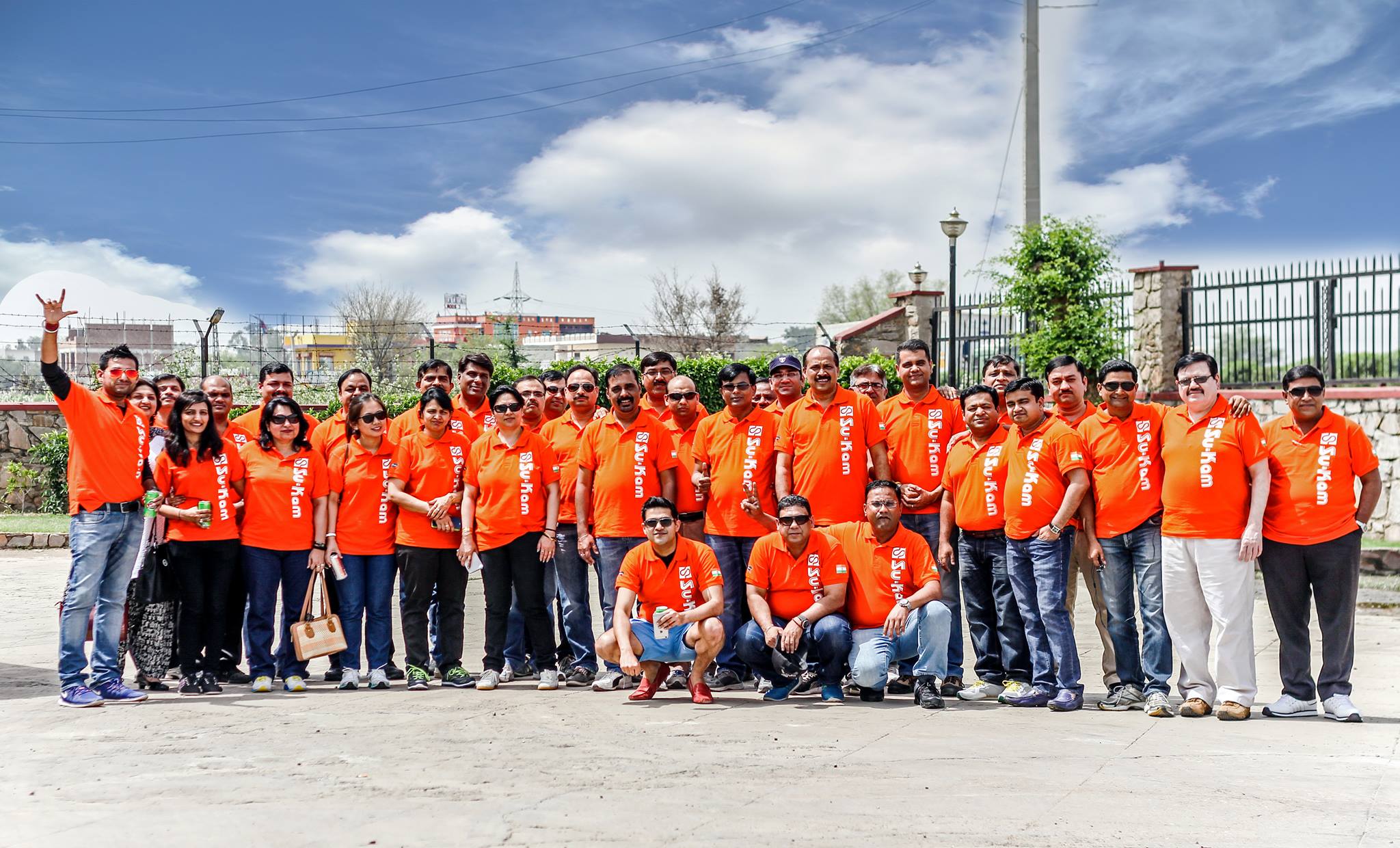
Cluster Meet — field sales and service in one frame, one uniform, one scorecardCluster Meet — field sales और service एक फ्रेम में, एक यूनिफ़ॉर्म, एक scorecard
When you scale a manufacturing and power-backup brand across Punjab, Uttar Pradesh, Rajasthan, the East, and the southern corridors, centralized control breaks down. You cannot manage regional profitability from a corporate headquarters. To solve this, we pioneered the Cluster Meet framework — breaking massive regional branches into tight, accountable local units.जब आप manufacturing और power-backup brand को Punjab, Uttar Pradesh, Rajasthan, East और southern corridors तक फैलाते हैं, तो centralized control टूट जाता है। Regional profitability corporate headquarters से नहीं चलाई जा सकती। इसी हल के लिए हमने Cluster Meet framework बनाया — बड़ी regional branches को छोटे, ज़िम्मेदार local units में तोड़ा।
This is the operator's playbook from those October Cluster Meets: how we drove profitability, local ownership, and distributor discipline — the commercial twin of the people culture in Life at Su-Kam.यह उन्हीं October Cluster Meets का operator playbook है: profitability, local ownership और distributor discipline कैसे चलाई — वही commercial जुड़वाँ जो Life at Su-Kam की people culture के साथ चलती थी।
What Is a Cluster? Decentralizing ControlCluster क्या है? Control को ज़मीन पर उतारना
A cluster is a tight operational unit: local service centers paired with dedicated sales executives and service engineers. Instead of treating an entire state as a monolith, we grouped resources locally to manage two things at once — local revenue growth and local cost optimization.Cluster एक सघन operational इकाई है: local service centers के साथ dedicated sales executives और service engineers। पूरे राज्य को एक ढेर समझने की बजाय हमने संसाधन स्थानीय रूप से जोड़े — एक साथ local revenue growth और local cost optimization।
Distributors, dealers, secondary sales, AMCDistributors, dealers, secondary sales, AMC
TA/DA, credit, inventory, replacementsTA/DA, credit, inventory, replacements
- Deep product know-how: Teams mastered categories — Home UPS and batteries, high-capacity and online UPS, and solar panels, charge controllers, and inverters — with named product managers they could call.
- Profitability tracking: The metric moved from vanity revenue to true net margin the cluster could influence.
- Named accountability: Every cluster had sales and service heads on a living map — Ambala to Guwahati, Hyderabad to Srinagar — so ownership was a person, not a region code.
- गहरी product समझ: टीमें categories में मजबूत हुईं — Home UPS और batteries, high-capacity और online UPS, और solar panels, charge controllers, inverters — नाम वाले product managers के साथ।
- Profitability tracking: Metric vanity revenue से हटकर उसी net margin पर आई जिस पर cluster असर डाल सके।
- नाम वाली ज़िम्मेदारी: हर cluster के sales और service heads एक living map पर थे — Ambala से Guwahati, Hyderabad से Srinagar — ownership region code नहीं, इंसान था।
The Cluster Profitability EquationCluster Profitability का समीकरण
Every cluster ran on one financial reality:हर cluster एक वित्तीय हकीकत पर चलता था:
Net Margin = Gross Margin − Costs within Local ControlNet Margin = Gross Margin − Costs within Local Control
Roughly 75–80% of costs — raw material, manufacturing, logistics, schemes allocated from HO — sat outside local control. The remaining 15–20% — sales and service salaries, TA/DA, battery and component replacements, interest on credit and locked inventory — was entirely the cluster's job. That slice is where field leaders either create or destroy margin.लगभग 75–80% लागत — raw material, manufacturing, logistics, HO से आने वाली schemes — local control से बाहर थी। बाकी 15–20% — sales/service salary, TA/DA, battery और component replacement, credit और locked inventory पर interest — पूरी तरह cluster का काम था। उसी हिस्से में field leaders margin बनाते या बिगाड़ते हैं।
Levers to improve marginsMargin सुधारने के levers
Revenue increase: more distributors and deeper dealer penetration; product-specific distributors; high-profitability SKUs; secondary sales; service revenue through AMC and product support; sharper local pricing and promotions.Revenue बढ़ाना: ज़्यादा distributors और गहरी dealer penetration; product-specific distributors; high-profitability SKUs; secondary sales; AMC और product support से service revenue; तेज़ local pricing और promotions।
Cost reduction: better forecasting to cut inventory holding; less credit extended; TA/DA tracked and controlled; battery and component replacement costs attacked without killing service quality.Cost घटाना: बेहतर forecasting से inventory holding कम; कम credit; TA/DA पर नज़र और नियंत्रण; battery और component replacement घटाएँ — बिना service quality मारे।
The Field Playbook and ComplianceField Playbook और Compliance
Scaling hardware requires boring discipline. Cluster Meets were where we locked the rules — then expected them every month, every sales area.Hardware स्केल करने के लिए नीरस अनुशासन चाहिए। Cluster Meets वही जगह थीं जहाँ नियम लॉक होते — फिर हर महीने, हर sales area में उन्हीं की उम्मीद।
- Strict data hygiene: Track opening and closing stock of every distributor daily. Watch Minimum Operating Distributor Price and Minimum Operating Dealer Price. Maintain the review template and report by the 25th. Lock targets and new dealer/distributor additions between the 25th and 30th. Scheme proposals for the next month only in that window — miss it, and no scheme floats for that area.
- Mandatory partner training: No distributor or dealer sold a new line without product training, test, and certification. Share product presentations; stay active on state WhatsApp groups for sales and service.
- Professional standards: Call partners by name with Mr./Ms. — not sir/jee theatre. Call inventory stocks/goods/products — never maal. Clean language sets the tone for lasting B2B relationships.
- Dealer technical meets: Thirty-day notice, follow the template, keep attendance tight (about fifty). Map distributors category-wise. Follow battery revival and BRC processes in region.
- सख्त data hygiene: हर distributor का daily opening/closing stock। Minimum Operating Distributor Price और Dealer Price देखें। Review template 25 तारीख तक। Targets और नए dealer/distributor 25–30 के बीच लॉक। अगले महीने की scheme proposals सिर्फ उसी खिड़की में — चूके तो उस area में scheme नहीं।
- ज़रूरी partner training: बिना product training, test और certification के कोई नई line नहीं। Product presentations बाँटें; state WhatsApp groups पर सक्रिय रहें।
- Professional standards: Partners को नाम से बोलें — sir/jee का नाटक नहीं। Inventory को stocks/goods/products कहें — maal नहीं। साफ़ भाषा ही लंबी B2B रिश्ते की नींव है।
- Dealer technical meets: 30 दिन का नोटिस, template, तकरीबन पचास attendees। Distributors को category-wise map करें। Region में battery revival और BRC process का पालन।
Product Mastery on the Groundज़मीन पर Product Mastery
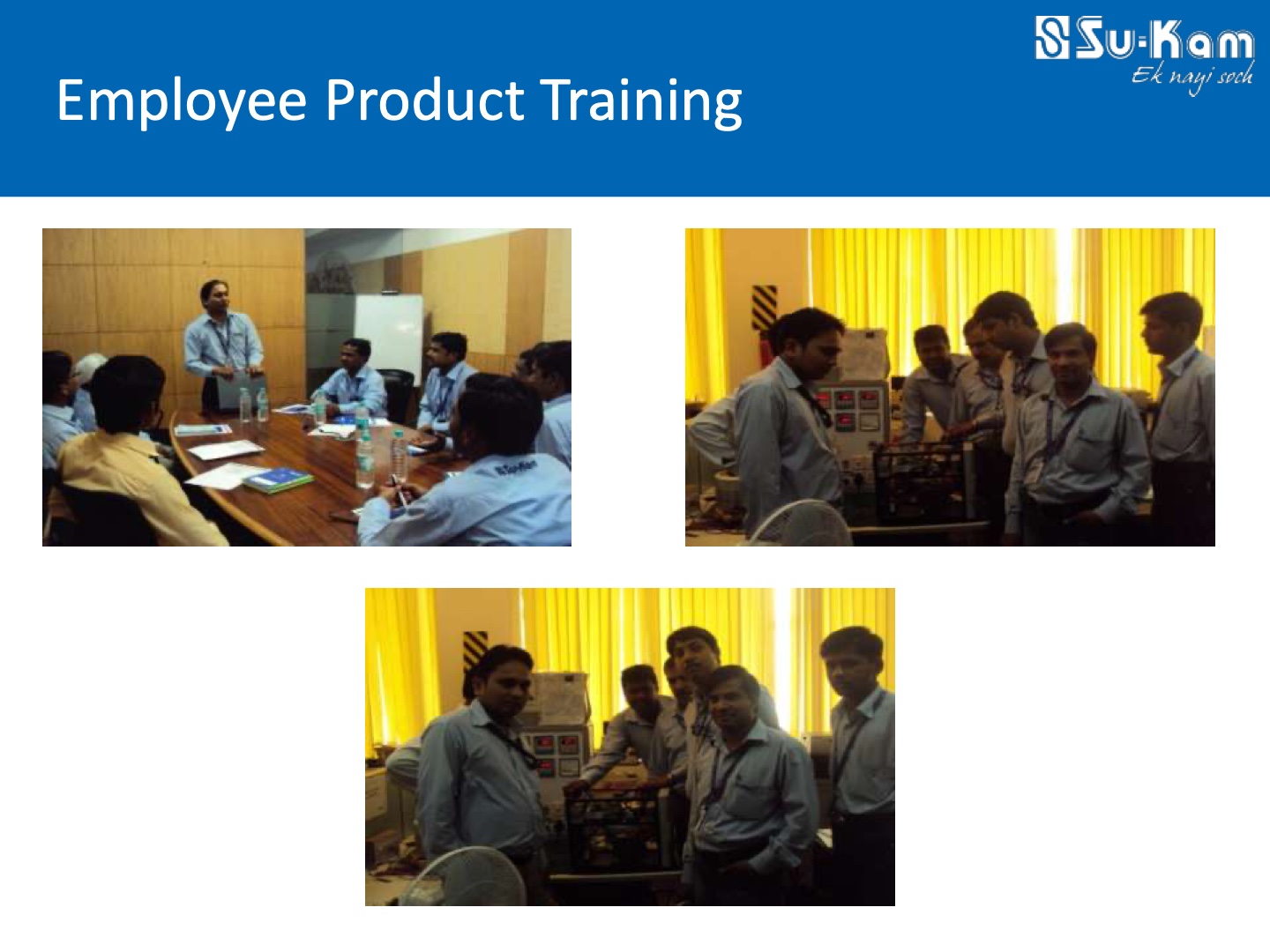
Employee Product Training
An operational framework is only as good as the hardware literacy behind it. Cluster Meet agendas closed with classroom training — two-hour sessions on innovations like Brainy Eco and Falcon HBU, product videos, and live demos such as the solar touch screen — so every sales executive and service engineer could walk into a dealer counter with technical confidence, not brochure language.Operational framework उतना ही मज़बूत है जितनी उसके पीछे hardware समझ। Cluster Meet एजेंडा classroom training पर खत्म होता — Brainy Eco और Falcon HBU जैसे innovations पर दो घंटे, product videos, solar touch screen जैसे live demos — ताकि हर sales executive और service engineer dealer counter पर brochure भाषा नहीं, technical confidence लेकर जाए।
That is the same instinct as starting R&D with one dedicated person and growing managers from within: capability is built, then measured where the customer stands.यही intuition R&D की एक dedicated शुरुआत और अंदर से managers बनाने वाली है: capability बनाई जाती है, फिर वहाँ मापी जाती है जहाँ customer खड़ा है।
The 5 Cluster Rules for MSME FoundersMSME Founders के लिए Cluster के 5 नियम
- Split the map before you scale the target: States are too large for one scorecard. Carve clusters that can own both revenue and controllable cost.
- Publish the equation: Make Net Margin = Gross Margin − Local Costs a wall chart, not a finance secret.
- Calendar the hygiene: Stock, prices, targets, schemes — locked between the 25th and 30th. Late paperwork is unpaid margin.
- Certify before you ship the story: No new SKU to the channel without training, test, and certification.
- Close every meet with product: Framework without hardware literacy is PowerPoint. End with the machine in the room.
- Target बढ़ाने से पहले नक्शा तोड़िए: राज्य एक scorecard के लिए बहुत बड़े हैं। ऐसे clusters बनाइए जो revenue और controllable cost दोनों संभाल सकें।
- समीकरण सार्वजनिक कीजिए: Net Margin = Gross Margin − Local Costs दीवार पर हो, finance का राज़ नहीं।
- Hygiene कैलेंडर पर बाँधिए: Stock, prices, targets, schemes — 25 से 30 के बीच लॉक। देर का paperwork unpaid margin है।
- कहानी से पहले certification: बिना training, test और certification के channel में नई SKU नहीं।
- हर meet को product पर खत्म कीजिए: बिना hardware समझ का framework सिर्फ PowerPoint है। कमरे में मशीन रखकर खत्म करें।
Scale requires structure. Give every geography a cluster that can count — revenue up, controllable costs down — and meet them until the discipline sticks.Scale के लिए structure चाहिए। हर भूगोल को ऐसा cluster दीजिए जो हिसाब रखे — revenue ऊपर, controllable costs नीचे — और मिलते रहिए जब तक अनुशासन बैठ न जाए।