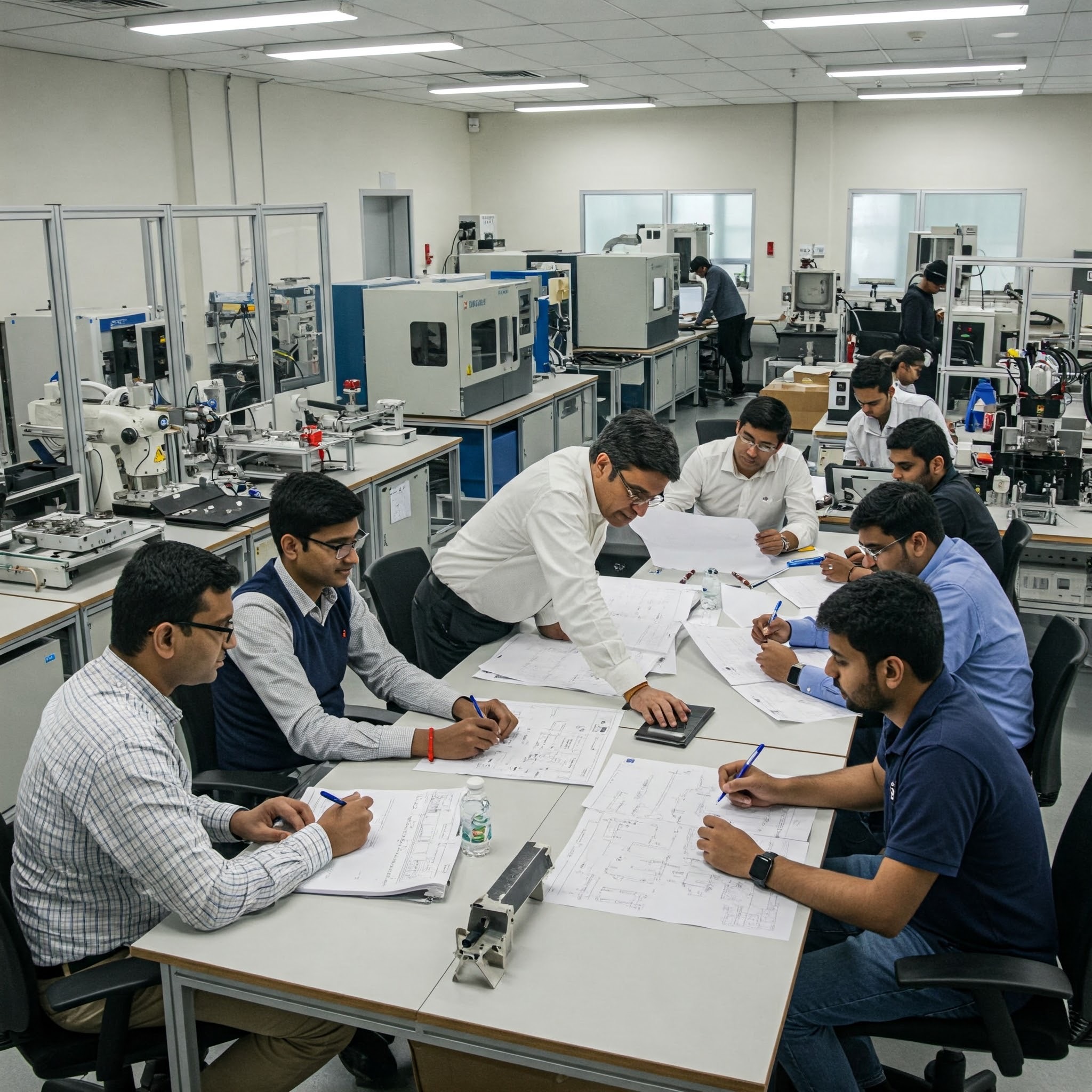
The real R&D structure starts when the team leaves the drawing and owns what sellsअसली R&D structure तब शुरू होती है जब team drawing छोड़कर यह own करे कि क्या बिकता है
In most MSMEs, R&D people never think they must get involved in selling. They stop short at product development — and after that their role stops. That is the biggest organisational challenge. Multinationals paper over it with large marketing and sales budgets. MSMEs have very limited budgets to play with, so the R&D team itself must see product sales, join marketing and service training, and stay accountable until the product is sold.ज्यादातर MSMEs में R&D वाले कभी नहीं सोचते कि उन्हें बेचने में शामिल होना है। वे product development पर रुक जाते हैं — और उसके बाद उनकी भूमिका खत्म। यही सबसे बड़ी organisational challenge है। Multinationals इसे बड़े marketing और sales बजट से ढकते हैं। MSMEs के पास बजट बहुत सीमित है, इसलिए R&D team खुद product sales देखे, marketing और service training में जुड़े, और product बिकने तक जवाबदेह रहे।
Companion to How to Start R&D and R&D Velocity. This playbook is the governance culture: revenue share into R&D, sell-through ownership, then domains, gates, and books that make that culture measurable.How to Start R&D और R&D Velocity का companion। यह playbook governance culture है: R&D में revenue share, sell-through ownership, फिर domains, gates, और books जो उस culture को measurable बनाएँ।
1. The Structure: Revenue Share + Sales Ownership1. Structure: Revenue Share + Sales Ownership
Create a rule in R&D: whichever product is being designed, the people who design it must get involved in the sales of that product, track its sales, and share in its commercial outcome — so R&D has a real revenue stream and can see whether it is profitable or in loss before any profit sharing.R&D में नियम बनाएँ: जिस product को डिज़ाइन किया जा रहा है, उसे डिज़ाइन करने वाले उसी product की sales में शामिल हों, sales track करें, और commercial outcome में हिस्सेदार हों — ताकि R&D की असली revenue stream हो और profit share से पहले दिखे कि unit profit में है या loss में।
Tapering revenue share of selling priceSelling price का घटता revenue share
Of the selling price of each designed product, a fixed share flows into the R&D pool for the first three commercial years, then stops:हर designed product की selling price में से तय हिस्सा पहले तीन commercial वर्षों में R&D pool में जाए, फिर बंद:
| Years after commercial launchCommercial launch के बाद वर्ष | Share of selling price → R&D poolSelling price का हिस्सा → R&D pool |
|---|---|
| Year 1वर्ष 1 | 5% |
| Year 2वर्ष 2 | 3% |
| Year 3वर्ष 3 | 2% |
| Year 4 onwardवर्ष 4 से आगे | 0% (no further revenue sharing)(आगे revenue sharing नहीं) |
That pool is how R&D funds itself alongside service income. The monthly R&D P&L must show this stream clearly. Only after the pool is profitable (or the loss is owned and explained) does team-level profit sharing happen.यही pool R&D को service income के साथ फंड करता है। मासिक R&D P&L पर यह stream साफ दिखे। Team-level profit sharing तभी जब pool profitable हो (या loss own और explain हो)।
What “involved in sales” means for engineersEngineers के लिए “sales में शामिल” का मतलब
- Track sell-through: Monthly board for each designed SKU shows units sold, not only prototype status.
- Join go-to-market: Dealer demos, application notes, and first-wave service training are R&D process — not optional favour to the sales team.
- Own the gap: If dealers cannot explain the product or service cannot install it, that is an R&D failure as much as a sales failure — especially when MSME marketing budgets are thin.
- Culture, not a memo: Without this habit, R&D stays a cost centre that stops at development while commercial teams carry the whole burden.
- Sell-through track करें: हर designed SKU की monthly board पर units sold दिखें, सिर्फ prototype status नहीं।
- Go-to-market में जुड़ें: Dealer demos, application notes, और first-wave service training R&D process हैं — sales team पर optional favour नहीं।
- Gap own करें: अगर dealer product समझा न सके या service install न कर पाए, वह sales जितनी ही R&D failure है — खासकर जब MSME marketing बजट पतला हो।
- Culture, memo नहीं: बिना इस आदत के R&D development पर रुकने वाला cost centre रह जाता है और पूरा बोझ commercial teams पर पड़ता है।
2. Domains That Support That Culture2. Domains जो उस Culture को सहारा दें
Revenue share only works if ownership is clear. Put leadership on the board — R&D Head and Solar Head — then specialised verticals so every mechanical, electronics, support, and app workstream has a named owner who can also be named on the sell-through board.Revenue share तभी चलता है जब ownership साफ हो। Leadership board पर — R&D Head और Solar Head — फिर specialised verticals ताकि हर mechanical, electronics, support, app workstream का named owner हो, जिसे sell-through board पर भी नाम से रखा जा सके।
- Verticals: Mechanical Design, Technical Support, Low-Capacity, Solar, High-Capacity, Mobile App (and outsourced support where needed).
- One owner per SKU: Design lead stays the commercial contact for demos and service training for year one at minimum.
- Verticals: Mechanical Design, Technical Support, Low-Capacity, Solar, High-Capacity, Mobile App (ज़रूरत पर outsourced support)।
- प्रति SKU एक owner: Design lead कम से कम वर्ष एक तक demos और service training का commercial contact रहे।
3. Gates: Prototype → Factory (Still Required)3. Gates: Prototype → Factory (अभी भी ज़रूरी)
Sell-through accountability does not replace engineering discipline. Every project still moves Prototype → PDQ → Pilot → Factory with dates, owners, and evidence — then continues onto the sales ledger. Vague “in progress” is not a status.Sell-through जवाबदेही engineering discipline की जगह नहीं लेती। हर project अभी भी Prototype → PDQ → Pilot → Factory चले — dates, owners, evidence के साथ — फिर sales ledger पर जारी रहे। अस्पष्ट “in progress” status नहीं है।
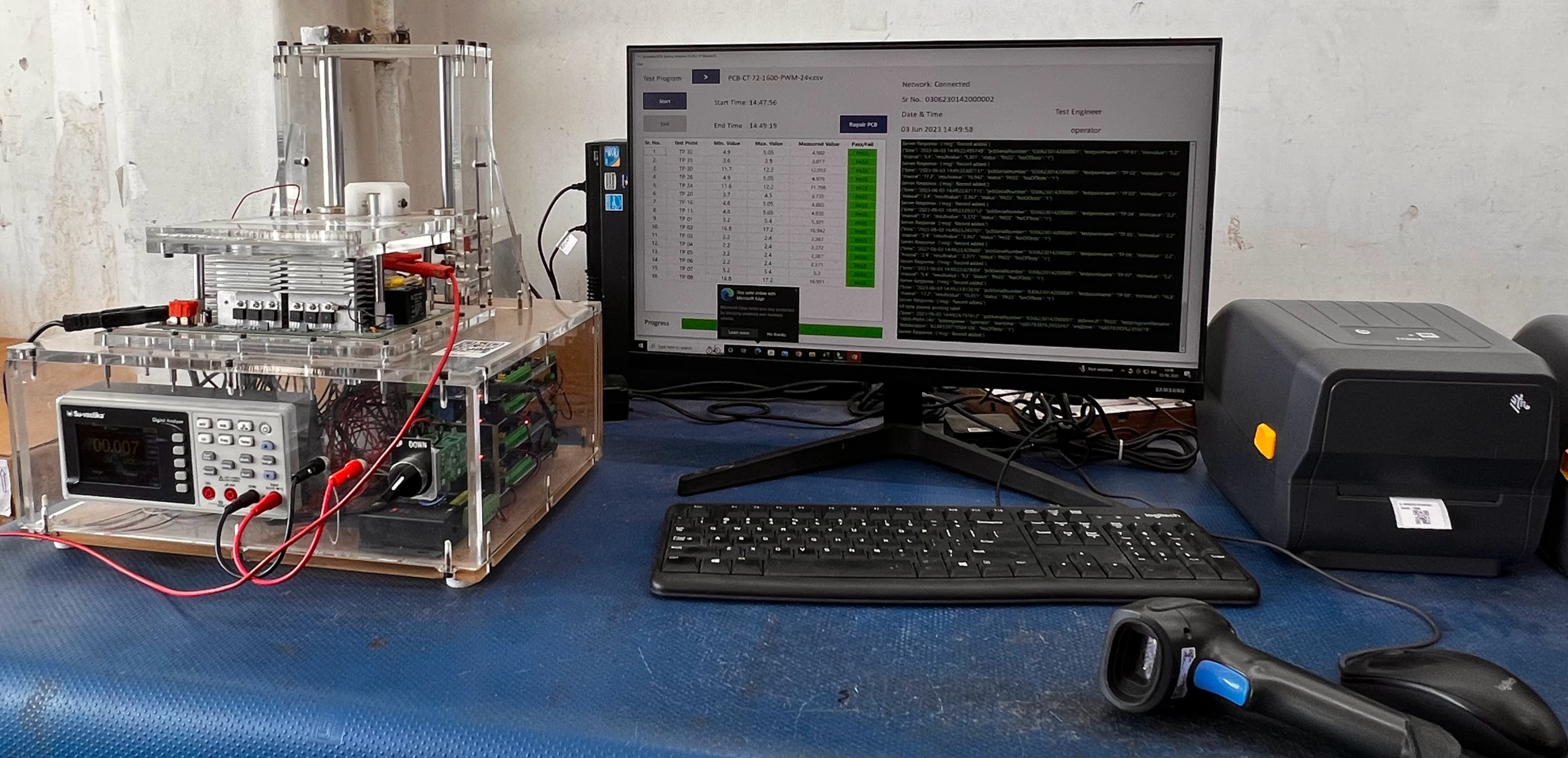
PDQ as a logged gate — then the same SKU must appear on the sales boardPDQ logged gate — फिर वही SKU sales board पर भी दिखे
4. Books: See Profit or Loss Before Profit Share4. Books: Profit Share से पहले Profit या Loss देखें
Publish a monthly R&D P&L: salaries, rent, maintenance, materials on one side; service / programming income and the SKU revenue-share (5% / 3% / 2%) on the other. Founders and engineers read the same page. That is how limited MSME budgets stay honest — and how profit sharing stays earned.मासिक R&D P&L publish करें: एक ओर salaries, rent, maintenance, materials; दूसरी ओर service / programming income और SKU revenue-share (5% / 3% / 2%)। Founders और engineers एक ही पेज पढ़ें। सीमित MSME बजट इसी से ईमानदार रहता है — और profit sharing earned रहती है।
| Illustrative R&D books patternIllustrative R&D books pattern | What to showक्या दिखाएँ |
|---|---|
| Expensesखर्च | Salary, rent, maintenance, materialsSalary, rent, maintenance, materials |
| Incomeआय | Service / PCB work + product revenue shareService / PCB work + product revenue share |
| Decisionनिर्णय | Profit / loss of the pool → then team profit sharePool का profit / loss → फिर team profit share |
The Core Message for MSME FoundersMSME Founders के लिए मुख्य संदेश
"Design-done is not done. Give R&D a tapering share of selling price — 5%, then 3%, then 2%, then zero — make engineers track sales and train service, and only then talk profit sharing. MSMEs cannot buy MNC-scale marketing; they must build this culture." "Design-done पर्याप्त नहीं। R&D को selling price का घटता हिस्सा दें — 5%, फिर 3%, फिर 2%, फिर शून्य — engineers sales track करें और service train करें, तभी profit sharing की बात करें। MSMEs MNC-scale marketing नहीं खरीद सकते; उन्हें यह culture बनानी होगी।"
- Write the revenue-share rule into the R&D charter: 5% / 3% / 2% / 0% of selling price.
- Name a design owner per SKU who appears on the sell-through board and in service training.
- Close R&D books monthly with the share visible — profit or loss before personal share.
- Keep gates tight — prototype to factory still matters; sales ownership starts after, not instead.
- Revenue-share नियम R&D charter में लिखें: selling price का 5% / 3% / 2% / 0%।
- प्रति SKU design owner नामित करें — sell-through board और service training पर।
- मासिक R&D books बंद करें — share दिखे; personal share से पहले profit या loss।
- Gates कसकर रखें — prototype से factory अभी भी मायने रखता है; sales ownership उसके बाद है, उसकी जगह नहीं।