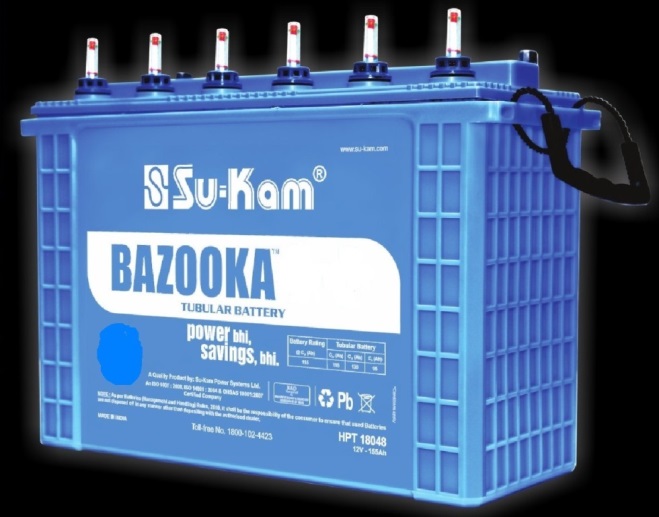
Tubular inverter batteries — the product line that forced us to engineer warranty out of the processTubular inverter batteries — वही product line जिसने हमें warranty को process से बाहर निकालने पर मजबूर किया
For MSMEs in energy storage and inverter batteries, scaling manufacturing is often stonewalled by one silent killer: high warranty return rates. PAM softening, bottom shorts from active-material shedding, acid stratification — failures that eat margins and destroy dealer trust.Energy storage और inverter batteries में MSMEs के लिए manufacturing स्केल करना अक्सर एक खामोश दुश्मन से रुक जाता है: ऊँचे warranty return rates। PAM softening, shedding से bottom shorts, acid stratification — failures जो margins खाते हैं और dealer trust तोड़ते हैं।
Drawing from Su-Kam's manufacturing blueprints and technical audits (Battery models), here is the operator's playbook — how we systematically engineered reliability on the shop floor. Companion deep-dive on the multi-year lab program: Battery R&D as margin protection. Same seriousness as BIS as an engineering mission: process, not hope.Su-Kam के manufacturing blueprints और technical audits (Battery models) से यह operator playbook है — shop floor पर reliability कैसे systematically engineer की। Multi-year lab program का companion: Battery R&D as margin protection। वही गंभीरता जो BIS को engineering mission बनाने में थी: process, आशा नहीं।
Redesigning the Bottom Bridge to Prevent ShortsBottom Bridge Redesign: Shorts रोकना
One of the most common causes of premature failure in tubular and flat-plate lines is internal cell shorting from shed active material piling at the bottom.Tubular और flat-plate लाइनों में premature failure का एक आम कारण है — shed active material नीचे जमा होकर cell short कर देना।
- The flaw: Traditional designs used a flat-topped bottom bridge. Loose active material accumulated on that shelf, bridged positive to negative, and killed the cell.
- The fix (Jul ’14 on Conqueror & Warrior 150 Ah): We redesigned the bottom bridge with vertical ribs — plates rest so shedding material settles safely between the ribs instead of bridging the gap. Status in our corrective-action register: implemented to address warranty failure due to bottom short.
- खामी: पुराने designs में flat-topped bottom bridge था। Loose active material उस shelf पर जमा होकर positive–negative को bridge कर cell मार देता था।
- हल (Jul ’14 — Conqueror & Warrior 150 Ah): Bottom bridge को vertical ribs वाला बनाया — shedding material ribs के बीच सुरक्षित बैठे, gap bridge न करे। Corrective-action register में status: bottom short वाले warranty failure के लिए implemented।
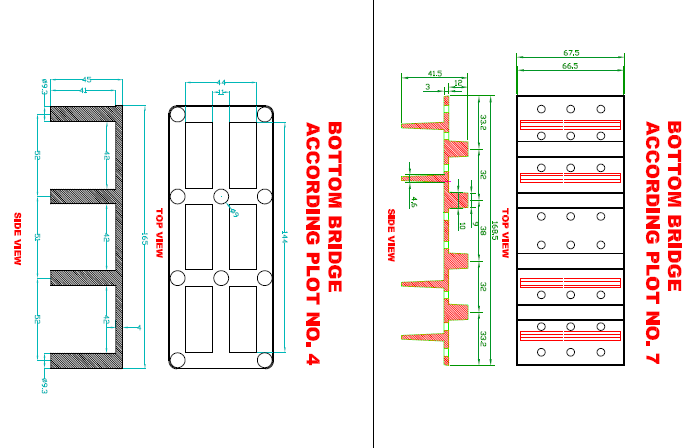
Bottom bridge design change — Plot geometries with vertical ribs so shed material settles safelyBottom bridge design change — vertical ribs वाली plot geometry ताकि shed material सुरक्षित बैठे
Flat bottom → accumulation → cell short | Vertical ribs → material settles → shorts eliminatedFlat bottom → जमाव → cell short | Vertical ribs → material बैठता है → shorts खत्म
Steam Curing: Tetrabasic Lead SulphateSteam Curing: Tetrabasic Lead Sulphate
Battery life is not only decided in formation. It is locked in during curing.Battery life सिर्फ formation में नहीं तय होती। वह curing में लॉक होती है।
Many smaller manufacturers stay on low-temperature curing, which yields smaller tribasic lead sulphate particles — higher initial performance, shorter cycle life. We connected existing curing ovens to a steam generator to reach up to 65°C and ≥ 95% RH, and procured a new four-skid curing oven capable of up to 80°C and ≥ 95% RH.कई छोटे manufacturers low-temperature curing पर रह जाते हैं, जिससे छोटे tribasic lead sulphate particles बनते हैं — शुरुआती performance ऊँची, cycle life छोटी। हमने existing curing ovens को steam generator से जोड़ा — 65°C तक और ≥ 95% RH — और नया four-skid curing oven लिया जो 80°C तक और ≥ 95% RH दे सके।
High-temperature curing forms tetrabasic lead sulphate (4BS) — larger orthorhombic crystals. That shift cuts PAM softening on flat inverter plates and negative mossing on tubular lines. Steam curing was rolled across flat-plate positives and all industrial negative plates.High-temperature curing से tetrabasic lead sulphate (4BS) बनता है — बड़े orthorhombic crystals। इससे flat inverter plates पर PAM softening और tubular लाइनों पर negative mossing घटता है। Steam curing flat-plate positives और सभी industrial negative plates पर लगाया गया।
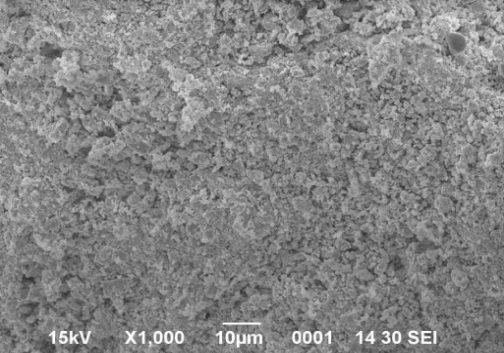
SEM · crystal morphology under curing regime (15 kV, ×1000, 10 µm)SEM · curing regime के तहत crystal morphology (15 kV, ×1000, 10 µm)
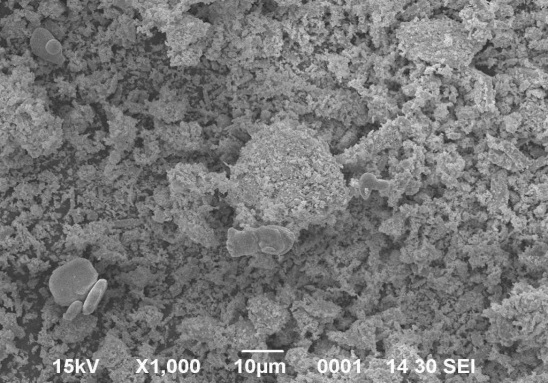
SEM · larger, more structured particles associated with high-temperature curingSEM · high-temperature curing से जुड़े बड़े, अधिक structured particles
Packed Density and Hi-Charge SeparatorsPacked Density और Hi-Charge Separators
To stop shedding near end of life, gauntlet density and separator geometry need shop-floor control — not catalogue promises.End of life के पास shedding रोकने के लिए gauntlet density और separator geometry shop-floor control मांगते हैं — catalogue के वादे नहीं।
- Packed density: Raised from the previous 3.51–3.55 g/cc to 3.75–3.85 g/cc — aimed squarely at warranty returns from PAM softening and voids in the gauntlet near end of life.
- Hi-charge separators: Moved to diagonal-rib separators with an 8.0 mm pitch, and advanced multi-directional mini-rib profiles. Before: serrated major ribs (~3.5 mm pitch) on the positive side and “U” mini-ribs on the negative. After: water loss down, stratification down, puncture risk down.
- Packed density: पहले 3.51–3.55 g/cc से बढ़ाकर 3.75–3.85 g/cc — सीधा लक्ष्य: PAM softening और gauntlet voids से आने वाले end-of-life warranty returns।
- Hi-charge separators: 8.0 mm pitch वाले diagonal-rib separators और multi-directional mini-rib profiles। पहले: positive पर serrated major ribs (~3.5 mm), negative पर “U” mini-ribs। बाद में: water loss, stratification, puncture risk — तीनों कम।
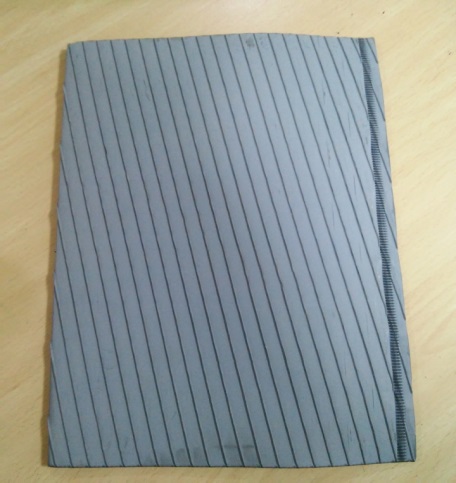
Diagonal rib separator — hi-charge geometryDiagonal rib separator — hi-charge geometry
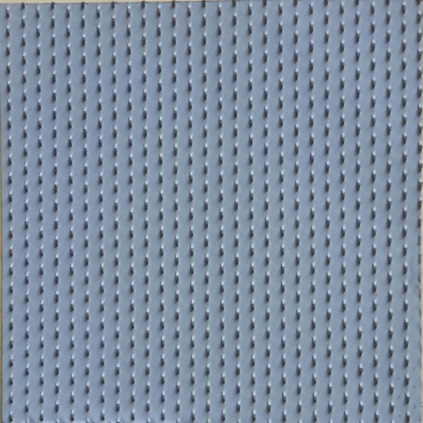
Mini-rib profile — denser surface for electrolyte managementMini-rib profile — electrolyte management के लिए सघन सतह

Multi-directional mini-ribs — after upgrade from serrated major ribsMulti-directional mini-ribs — serrated major ribs से अपग्रेड के बाद
The 5 Shop-Floor Rules for Battery MSMEsBattery MSMEs के लिए Shop-Floor के 5 नियम
- Design the dump zone: Bottom bridges must give shed material a place to settle without shorting plates.
- Cure for life, not only for first discharge: Steam / high-temp high-RH curing for 4BS beats cheap low-temp tribasic shortcuts.
- Measure packed density: Move toward 3.75–3.85 g/cc if you are still in the mid-3.5s and dying on end-of-life PAM claims.
- Upgrade separators as a system: Pitch, rib height, and mini-rib profile are warranty tools, not packaging details.
- Register every corrective action: Date, model, failure mode, status — Jul ’14 bottom-bridge style — so the plant cannot forget what worked.
- Dump zone डिज़ाइन कीजिए: Bottom bridges में shed material बैठे — plates short किए बिना।
- Life के लिए cure कीजिए, सिर्फ first discharge के लिए नहीं: 4BS के लिए steam / high-temp high-RH curing सस्ते low-temp tribasic shortcuts से बेहतर है।
- Packed density मापिए: अगर अभी mid-3.5s में हैं और end-of-life PAM claims आ रहे हैं, तो 3.75–3.85 g/cc की ओर बढ़ें।
- Separators को सिस्टम की तरह अपग्रेड कीजिए: Pitch, rib height, mini-rib profile — warranty के औज़ार हैं, packaging detail नहीं।
- हर corrective action register कीजिए: Date, model, failure mode, status — Jul ’14 bottom-bridge की तरह — ताकि plant भूले नहीं क्या काम आया।
Scaling battery manufacturing is not pushing volume out the door. It is process engineering that makes warranty claims rare — then boring.Battery manufacturing स्केल करना दरवाज़े से volume धकेलना नहीं है। वह process engineering है जो warranty claims को दुर्लभ — फिर नीरस — बना दे।